Window Tinting in Friendswood That Cuts Heat, Not Your View
We install ceramic window film, privacy tint, security film and decorative film in homes and businesses around Friendswood, Pearland and League City. Each film is chosen for your glass type and the direction your windows face, so rooms stay cooler, glare drops and floors and furniture stop fading.
- Free in-home consultation
- Film matched to your glass
- Written line-item quotes
- Clean, careful installs
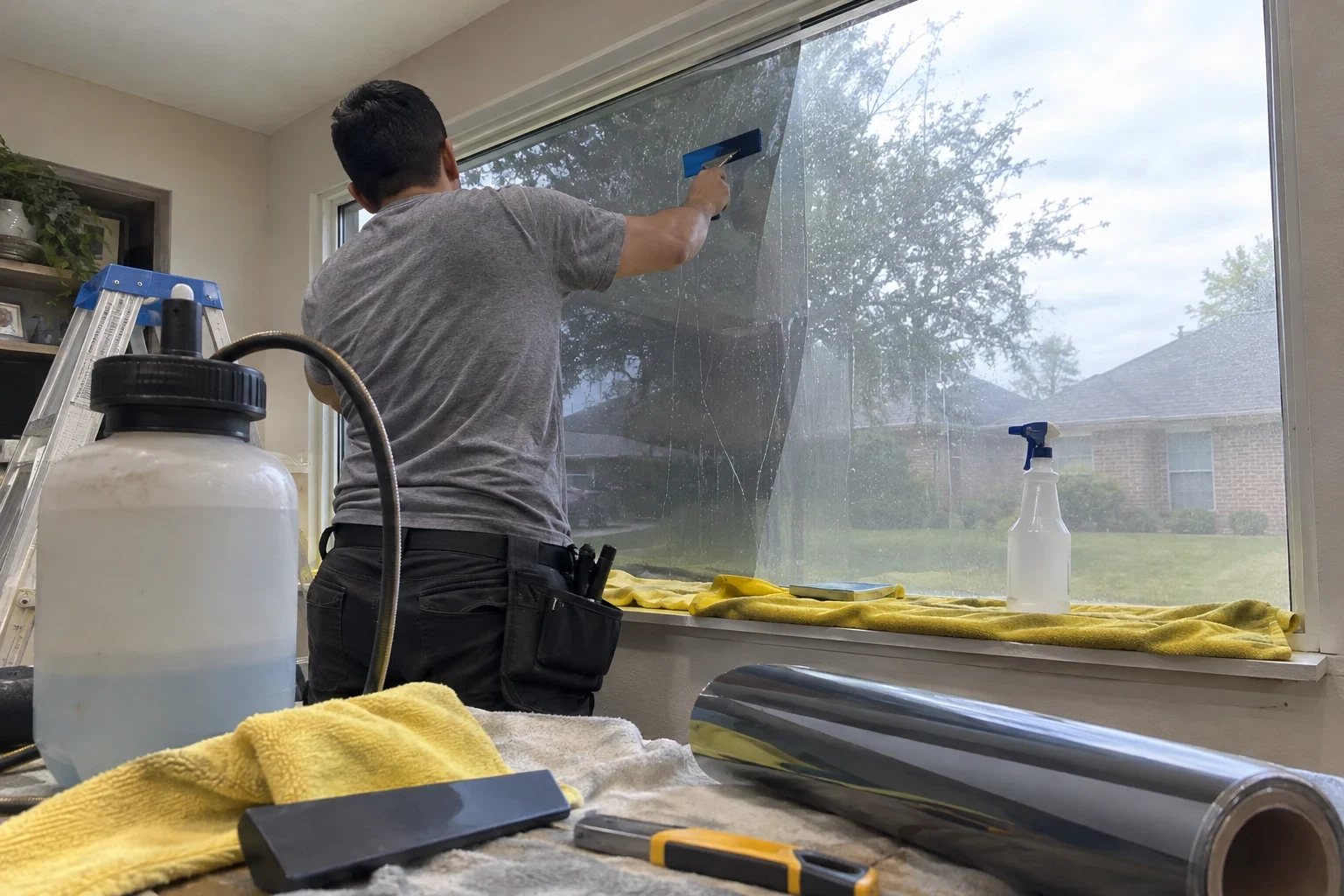
Window Film for Homes, Offices and Storefronts
We have been in business for 8 years, and that work includes 16,412+ commercial tint jobs completed, plus residential installs in living rooms, bedrooms and sunrooms. Most homeowners start with home window tinting or ceramic window film for heat rejection. Businesses tend to ask for office window tinting, reflective window film or security window film. We also handle privacy window tinting for bathrooms and street-facing rooms, decorative window tinting for glass doors and partitions, non-reflective window film where a mirrored look isn't wanted, and turf protection window film for homes next to synthetic lawns.
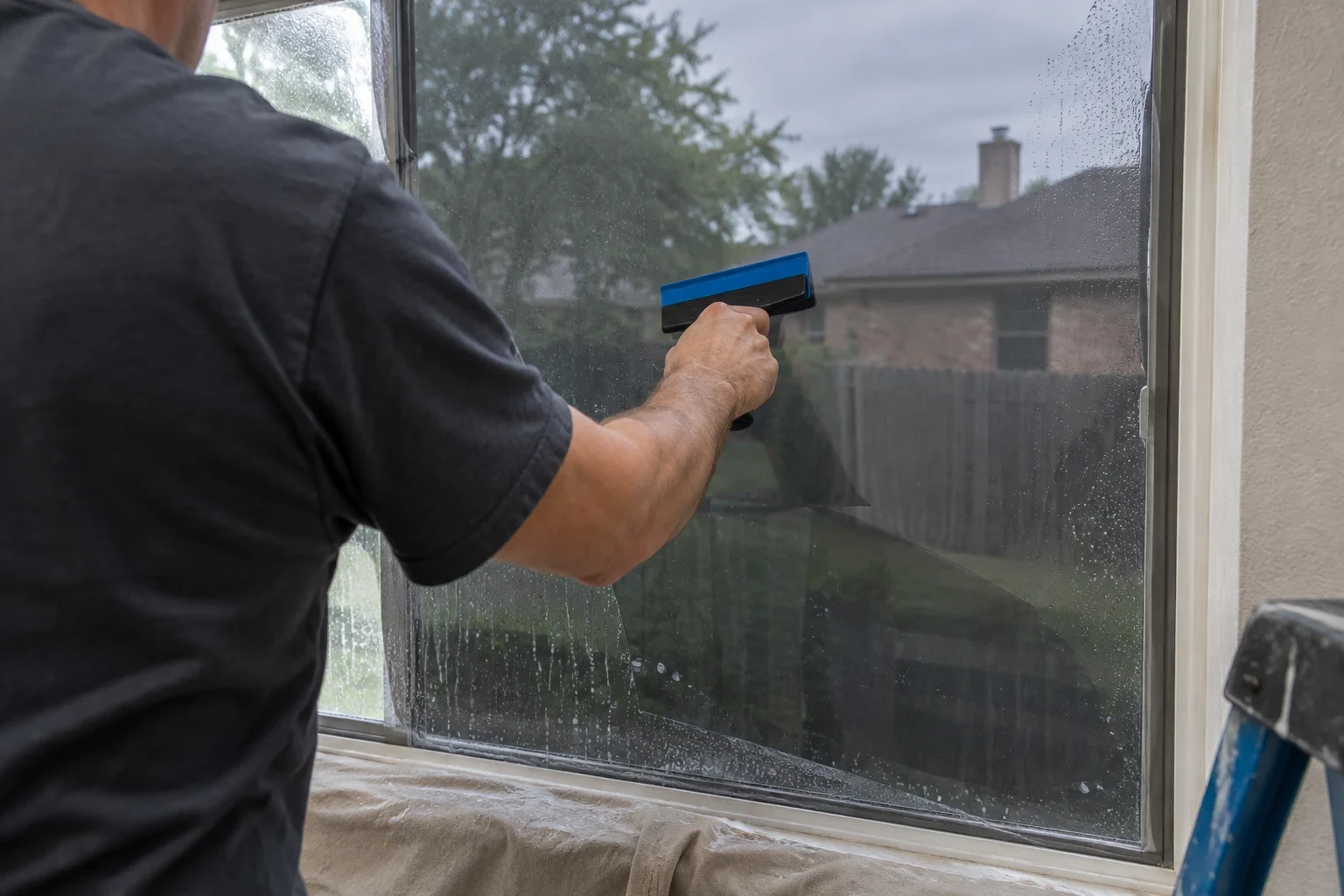
Home Window Tinting
Residential window film chosen for your glass type and sun exposure, so rooms stay cooler, glare drops and floors stop fading.
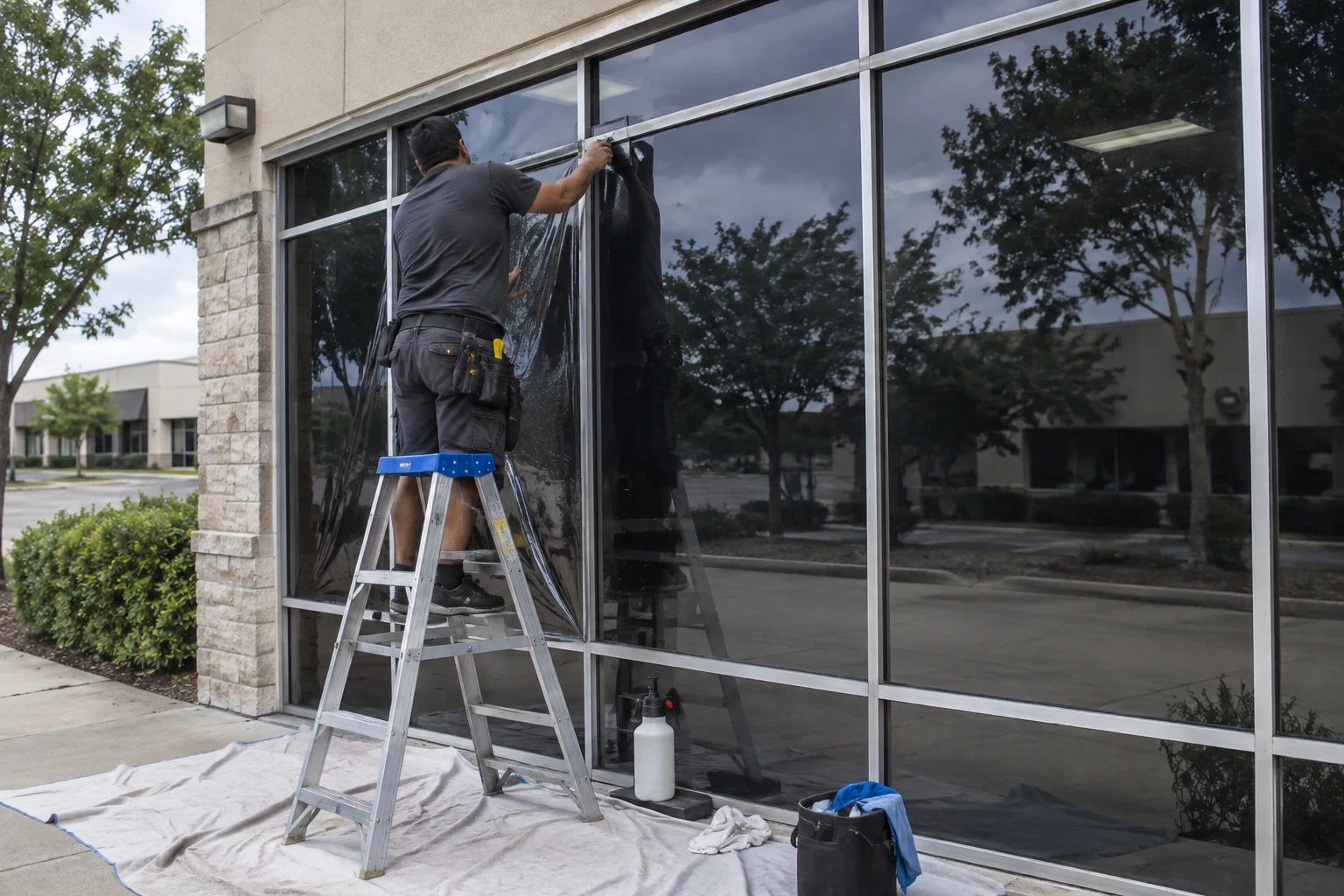
Commercial Window Tinting
Window film for storefronts, offices and strip-center suites that cuts solar heat, glare and fading without darkening the space more than you want.
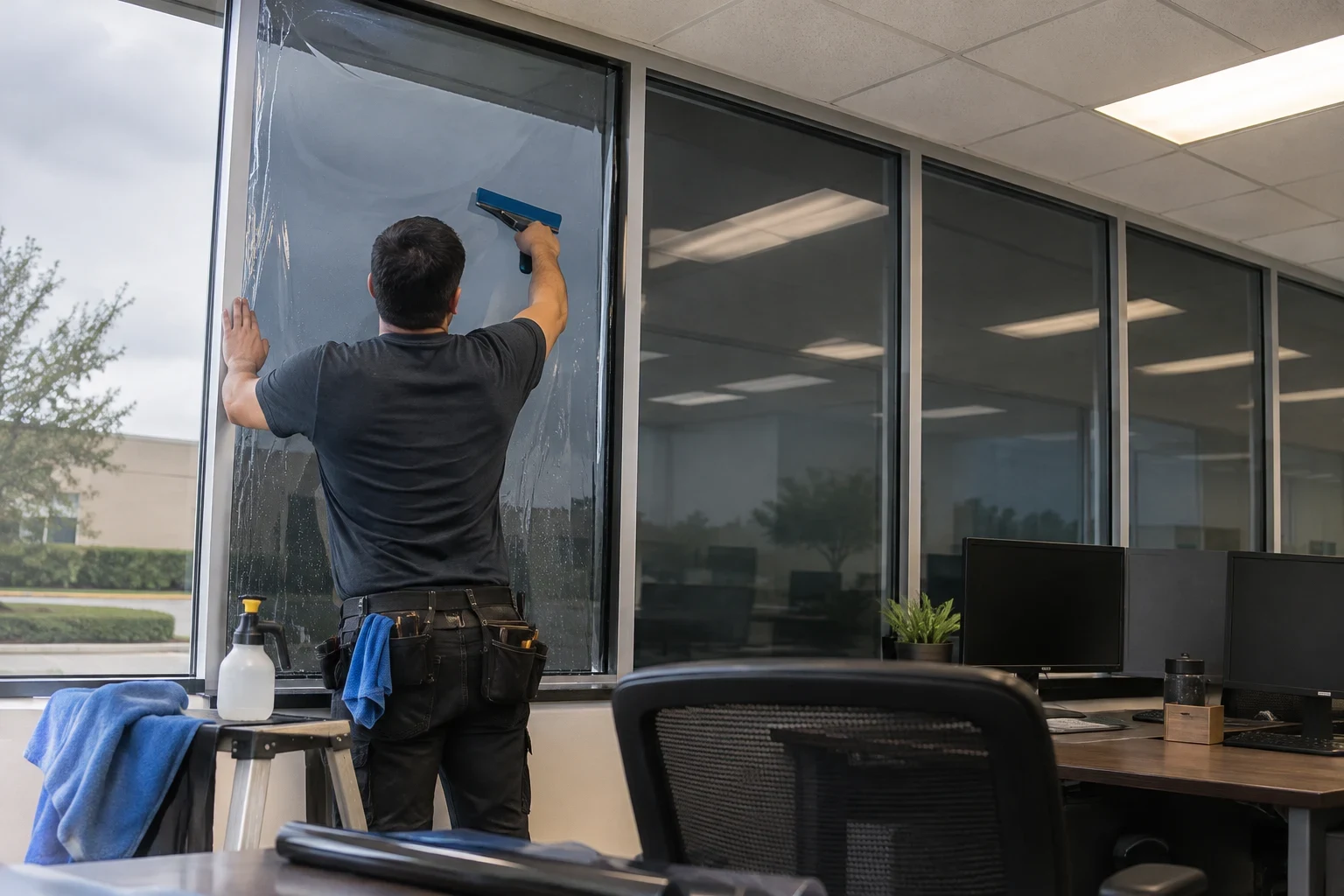
Office Window Tinting
Ceramic and reflective films that cut screen glare and afternoon heat in offices, installed room by room so the workday keeps going.
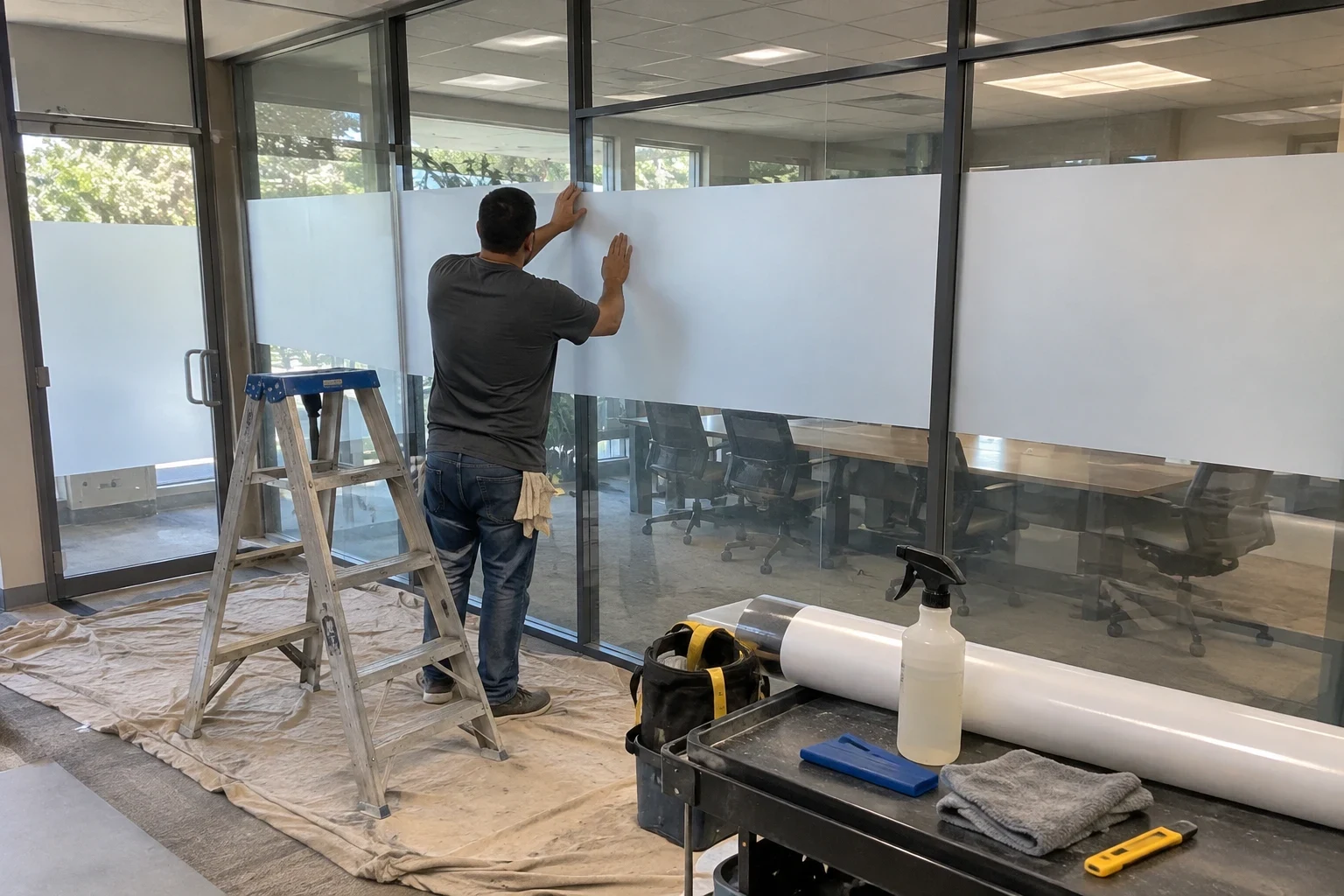
Privacy Window Tinting
One-way, frosted and blackout window film chosen room by room, so you know before install day exactly how much anyone can see in, by day and by night.
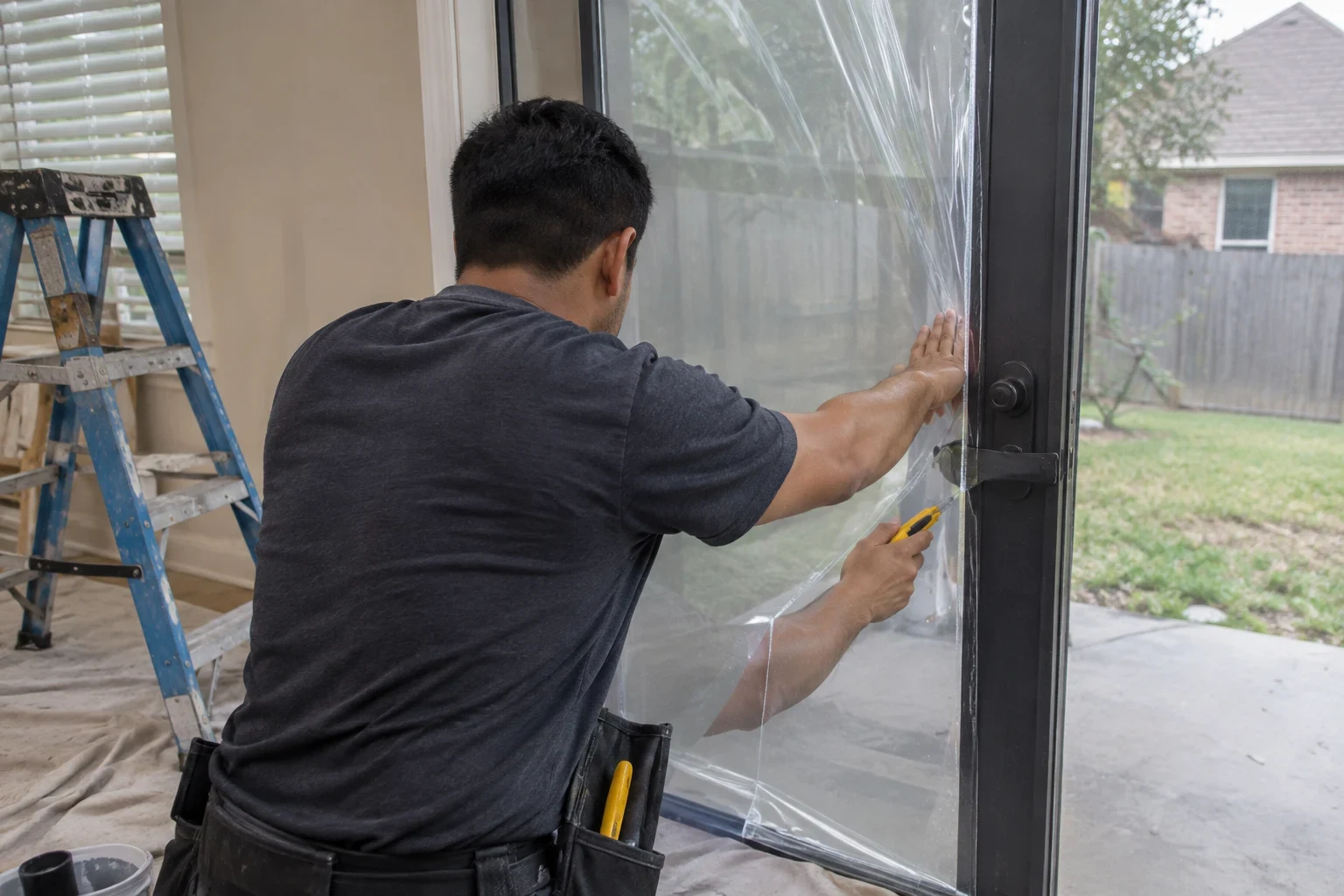
Security Window Film
Thick, clear polyester film that holds cracked glass together in the frame, slowing forced entry at doors and sidelights and limiting flying shards indoors.
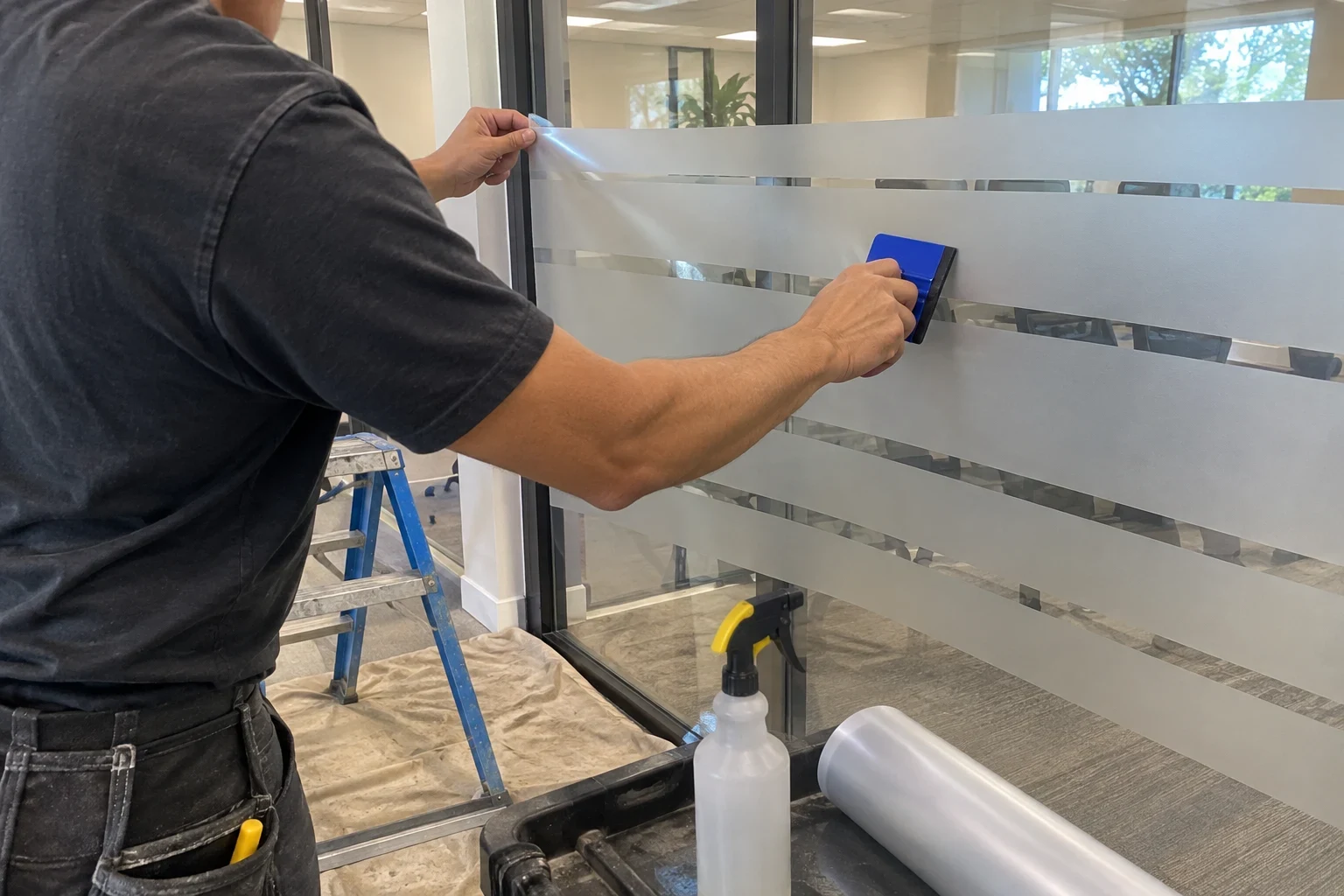
Decorative Window Tinting
Frosted, etched-look, gradient and patterned window film that softens a view or hides one, without replacing the glass.
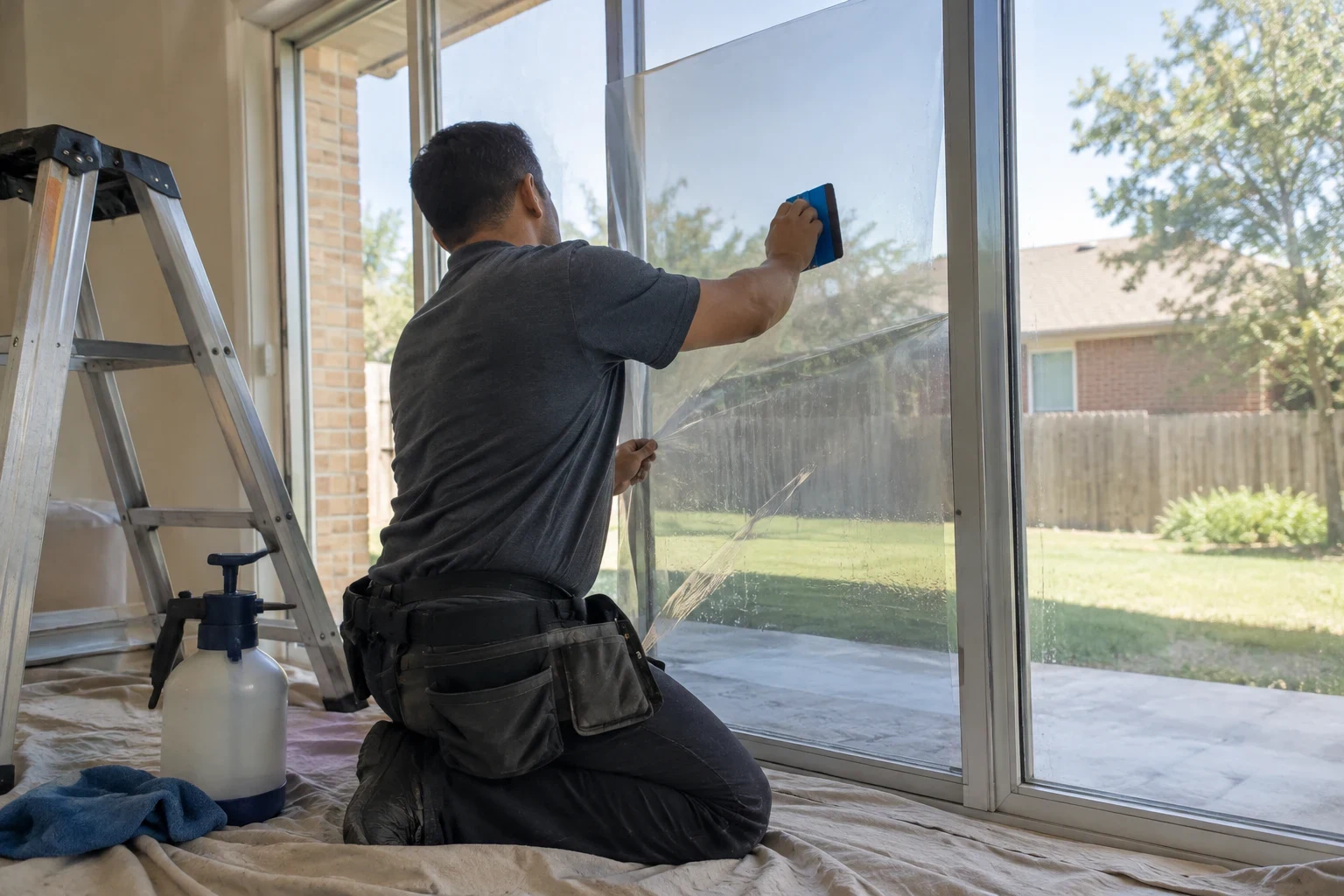
Ceramic Window Film
Nonmetallic ceramic film that rejects infrared heat and UV while keeping glass clear, low-glare and friendly to phone and Wi-Fi signals.
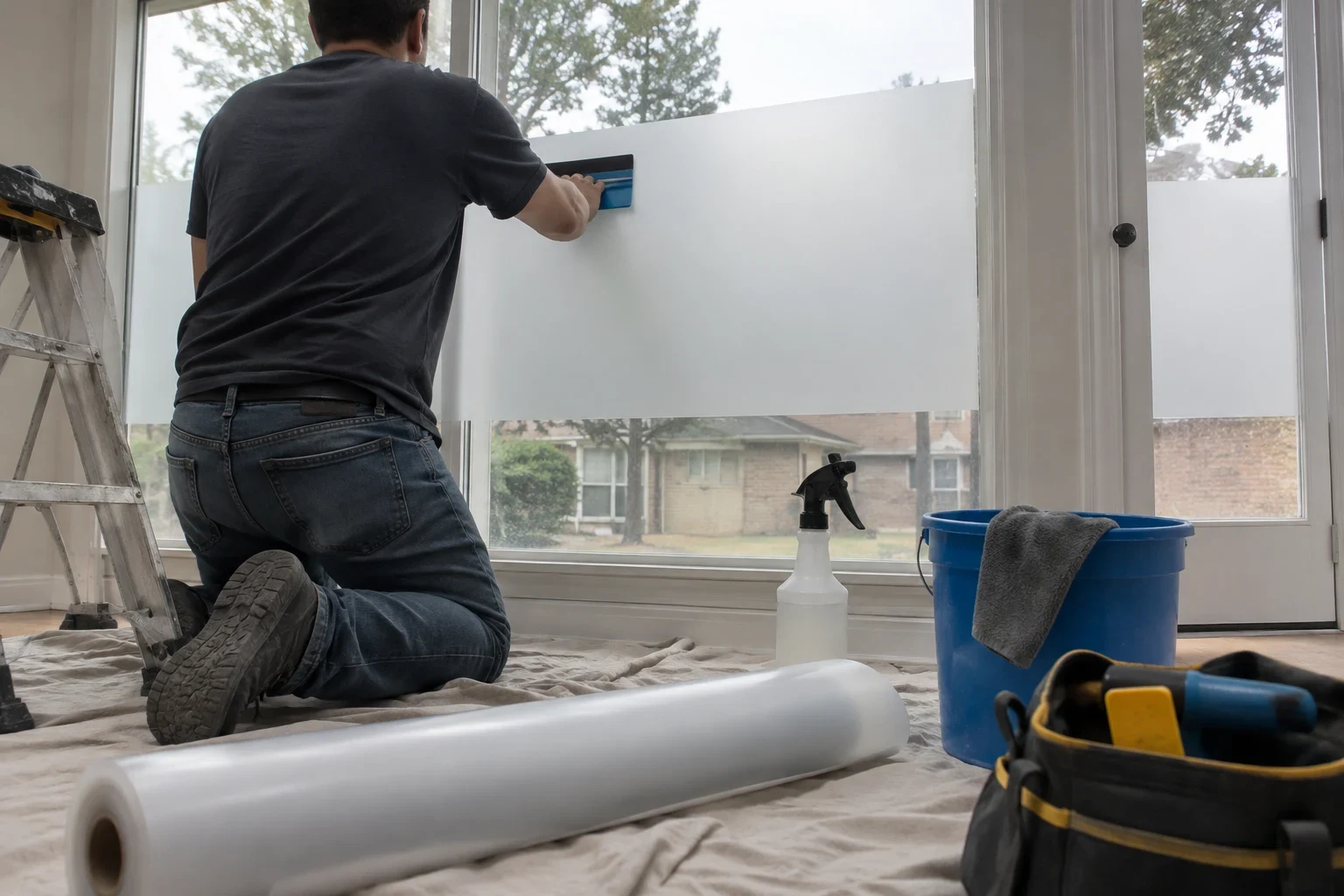
Reflective Window Film
Metallized film that reflects solar heat before it passes through the glass, with a mirrored look that adds daytime privacy on west and south windows.
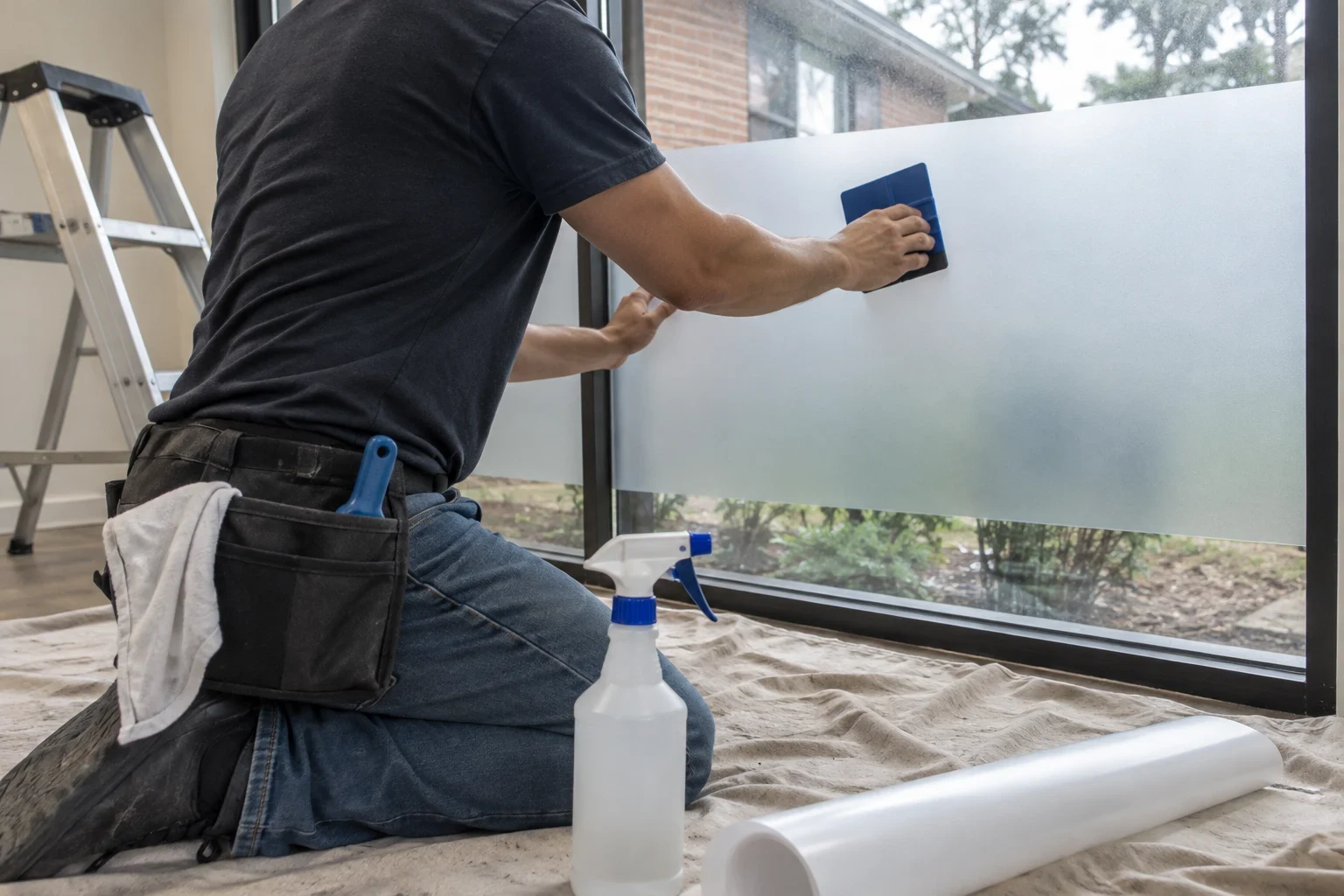
Non-Reflective Window Film
Low-reflectance window film that rejects heat and fades less furniture while the glass looks almost untouched from the street.
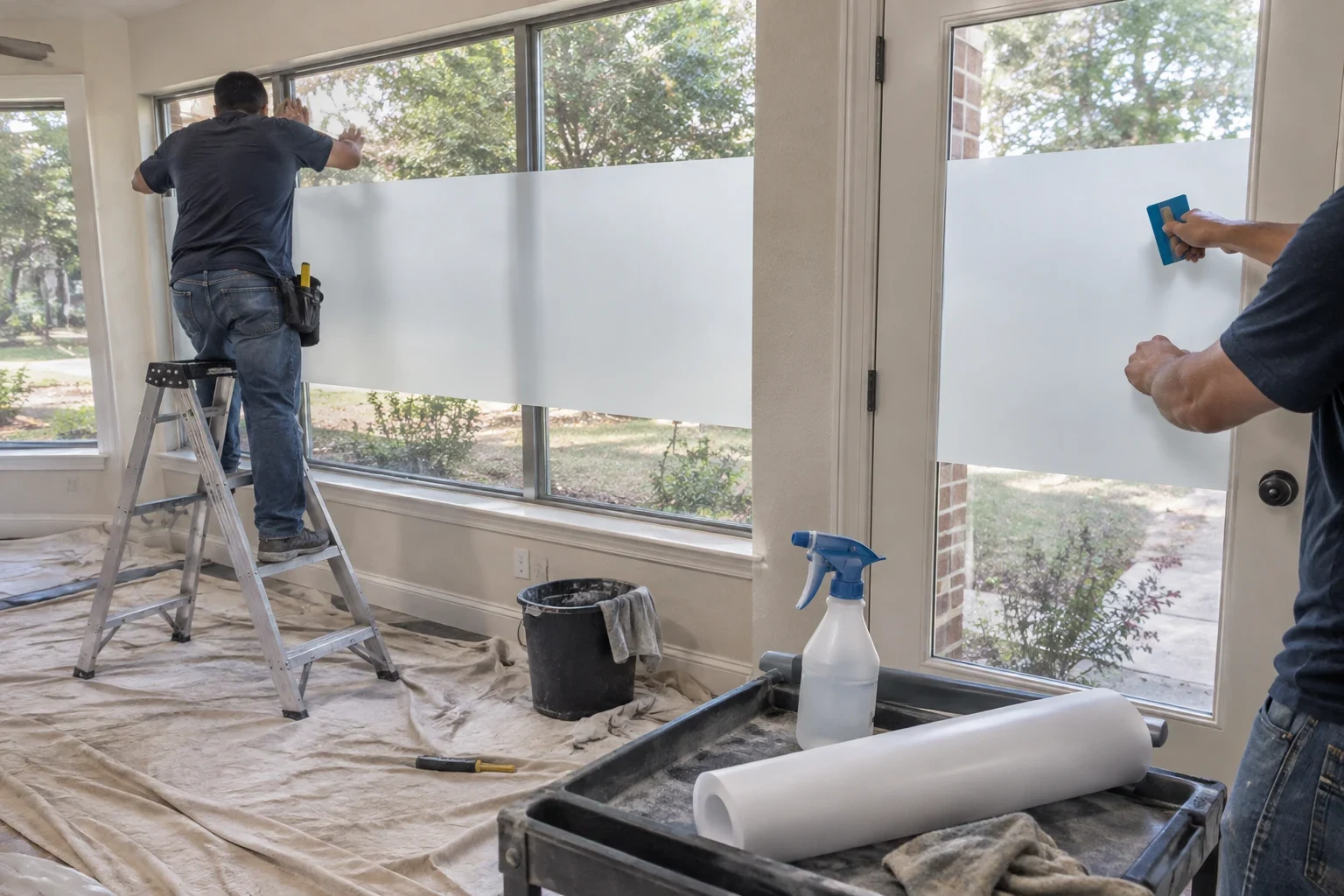
Turf Protection Window Film
Diffusing film for the Low-E windows that focus sunlight onto synthetic turf, siding and patio furniture, applied only to the panes causing the damage.
What Sets the Price of Window Tinting
Every set of windows is different, so every quote is too. During the consultation we measure and write down each of the details below. Each one appears as a separate line on the quote you get.
The consultation and quote are free. We list every window and film on its own line, and you see the full total before anything goes on the calendar.
- How much glass you have
- We measure coverage pane by pane in square feet, so the count and size of your windows drive most of the total. Covering a run of sliding patio doors takes more film than a couple of bedroom windows.
- Which film you choose
- Dyed films sit at the low end. Ceramic film costs more because its nano-ceramic particles block infrared heat without giving the glass a mirrored look. Security film is much thicker, often 7 to 15 mils, and it takes more labor to lay flat.
- Reach and height
- Transoms, two-story entry glass and windows over a staircase mean ladders or staging, and each pane takes longer.
- Taking off old film
- Film that has bubbled or faded to purple must be stripped before anything new goes on. Scraping off the leftover adhesive sometimes takes longer than the new install.
- Frame anchoring for security film
- Security film can stop at the glass edge or be tied into the frame with a structural attachment. The attachment adds material and time, but it helps keep shattered glass in the opening.
- Shapes and patterns
- Arched tops, angled panes, frosted bands and decorative designs need more cutting and layout than standard rectangles.
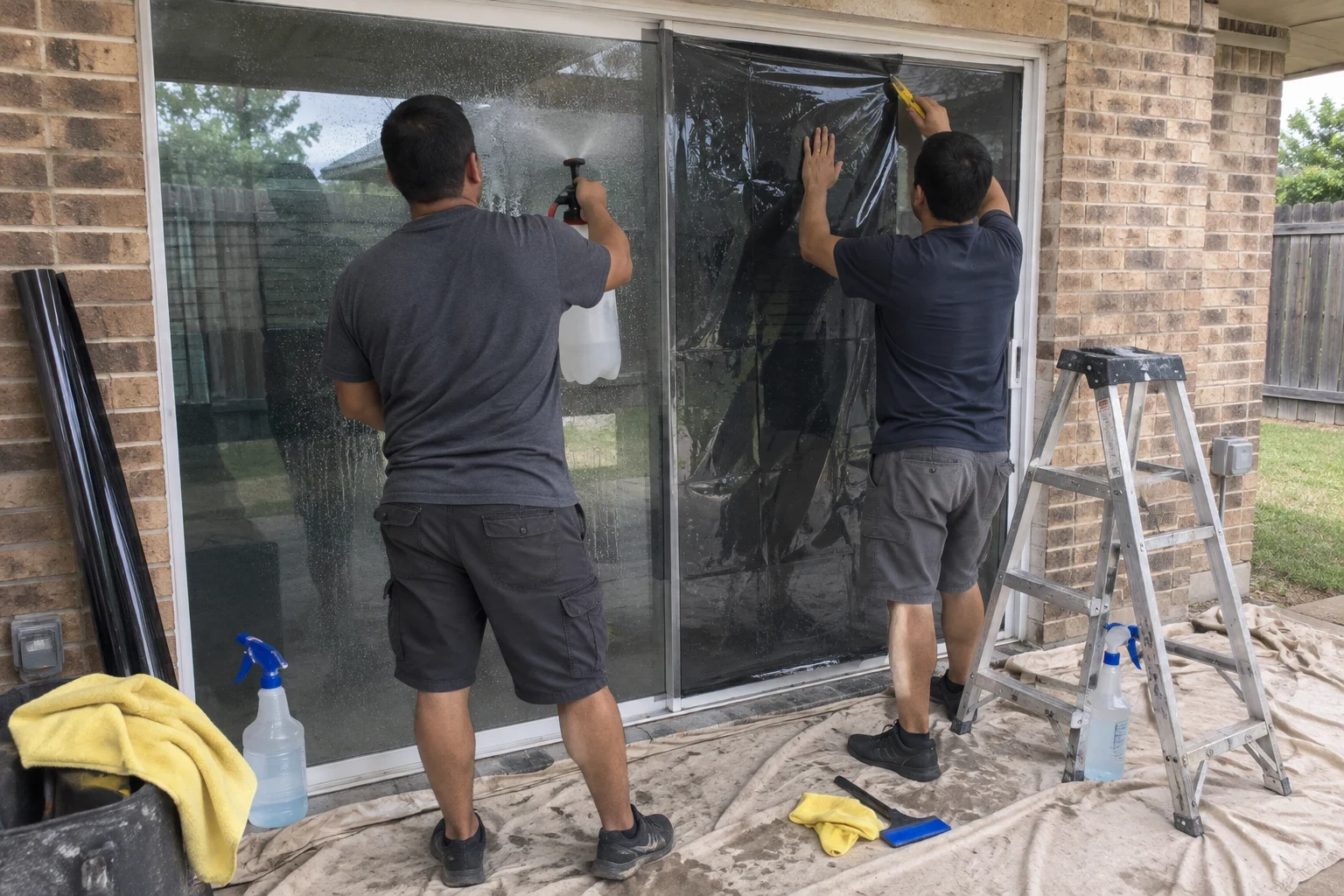
About Home Window Tinting Friendswood
We're a window film company that works inside homes and businesses across the Friendswood area. Much of what we know comes from commercial jobs, where film has to perform on large glass and look uniform from the parking lot. We bring the same habits into living rooms and home offices.
Hot, humid summers and strong afternoon sun shape most of what we recommend here. Many houses in this area have large rear windows, patio doors and dual-pane low-E glass from the builder, so we spend a lot of time choosing films that add heat rejection without overloading those units. We also give you a plain answer when film isn't the right fix, such as a failed window seal that should be replaced first.
- In business
- 8 years in business
How a Tinting Job Runs
Most homes are finished in one day. Every job moves through the same steps, from your first call to the final pass of the squeegee.
- 1
Your phone call
Tell us which rooms overheat, where glare lands or what you'd like hidden from the street. We'll set a time for your free consultation.
- 2
Consultation and measuring
We identify each type of glass, note which direction every window faces, measure each pane and hold film samples against it. You see the change in heat and light before you choose anything.
- 3
Written quote
Your quote lists each window and each film on its own line. Once you approve it, nothing gets added.
- 4
Install day
Drop cloths go down over floors and sills first. Each pane is scraped and washed, the film is floated into place on slip solution, and the water is pushed out from the center toward the edges. We trim the edges and tidy up before we leave.
- 5
Letting the adhesive set
The adhesive needs time to dry out behind the film, so a slight haze or a few tiny trapped droplets are normal early on. They clear on their own, though muggy summer stretches can slow the process. Hold off cleaning the film for about a month, then wipe it with a soft cloth and a cleaner that contains no ammonia.
How We Choose and Install Your Film
Window film is a thin polyester layer carrying metals, ceramics or dyes, held to the glass by a pressure-sensitive adhesive. Matched to the glass and the sun exposure, it does its job for years. Mismatched, it can cause problems.
- 01
We check the glass before we pick the film
Insulated dual-pane units, low-E coatings, tempered panels and older single-pane glass each take on and shed heat in their own way. When a dark film that soaks up a lot of solar energy goes on an insulated unit it isn't suited to, the edges of the glass can run much hotter than the center, which stresses the pane and its seal. We confirm your glass type first and compare it with the film manufacturer's compatibility charts before recommending anything.
- 02
Real performance numbers, not just UV claims
Nearly every good film stops about 99 percent of UV, so that figure doesn't separate one product from another. We show you total solar energy rejected and visible light transmission for each option. Those two numbers tell you how much cooler the room will be and how much darker it will look.
- 03
Samples on your windows, at your time of day
A film that looks neutral under showroom lights can turn gray, bronze or mirrored on west-facing glass in late afternoon. We stick samples to your own panes, so you can sit in the room and see what the outdoors looks like through them, then step outside and check how the house appears from the street.
- 04
Careful, tidy installs
We put down drop cloths, move blinds and decor aside, and prep each pane with a scraper and slip solution before any film goes on. Edges are trimmed with a small, consistent gap so the film doesn't lift at the gasket.
- 05
Commercial habits on every job
Years of office and storefront work taught us to plan around the people in the building. We schedule around business hours or your household's routine and finish one room before moving to the next.
Where We Install Window Film
We work out of Friendswood, TX, and most of our jobs are in homes and businesses within a short drive. We regularly install film in Pearland, League City, Alvin, Manvel and Dickinson. We also cover Webster, Nassau Bay, Taylor Lake Village, Pasadena and Deer Park.
- Friendswood
- League City
- Alvin
- Webster
- Pearland
- Dickinson
- Manvel
- Nassau Bay
- Taylor Lake Village
- Pasadena
- Deer Park
Don't see your town here? Ask when you phone us, since jobs close to one another can often share a trip.
Window Tinting Questions We Hear Most
Something not covered here? (281) 549-2845
Will window film make my rooms dark?
Only if you pick a dark film. Plenty of ceramic films pass most visible light while still stopping a big share of infrared heat. We give you the visible light transmission number for each option and put samples on your glass so you can judge it before deciding.
Can film damage my dual-pane windows or affect the window warranty?
The wrong film on the wrong glass can. Films that absorb a lot of solar energy make the glass hotter, and that heat puts stress on insulated units. We identify your glass and follow the film manufacturer's compatibility guidance. Some window manufacturers mention film in their own warranty terms, so check your window paperwork as well.
How much will tinting lower my energy bills?
That depends on how much direct sun your glass gets and which film goes on it. Windows facing west and south usually see the biggest change, and rooms that once needed the thermostat turned down often don't anymore. We won't quote you a fixed percentage, but we will show you the solar energy rejection figure for each film.
Can you take off old, bubbled tint?
Yes. Old film that has bubbled, peeled or turned purple has to be removed before new film can go on. We strip the film, scrape away the leftover adhesive and clean the glass so the new layer sits flat. Removal is listed as its own line on your quote.
Will privacy film let people see in at night?
Reflective films give privacy during the day because it's brighter outside than inside. After dark, with your lights on, that flips and people outside can see in. For privacy at every hour in bathrooms or rooms facing the street, frosted or decorative film works better, and we'll walk you through the trade-off on site.
Do I need a permit or HOA approval for window film?
Film applied to the inside of the glass generally doesn't need a building permit. Some homeowners associations do restrict mirrored or highly reflective glass visible from the street. If you have an HOA, read its rules first, and we can suggest non-reflective window film that keeps the glass looking natural.
Will film stop my floors and furniture from fading?
Ultraviolet light does most of the fading damage, and quality film screens out nearly all of it. Heat and visible light also contribute, so no film ends fading entirely. Choosing a film with higher solar rejection slows it down a good deal for hardwood, rugs and fabric.
How long does installation take?
A typical home with about a dozen windows is usually done in a day. Big commercial jobs, security film anchored to the frame and old film removal all add time. Your quote comes with a time estimate.
See Film Samples on Your Own Glass
We'll check what kind of glass you have, measure each pane and hold samples up in the rooms that get too hot or too bright. Your consultation and quote are free.