ServicesPrivacy Window Tinting
Privacy Window Tinting in Friendswood
We install privacy window film that stops neighbors and passersby from seeing in while daylight still reaches the room. Each film is matched to your glass, the direction the window faces and whether you need privacy during the day or after dark too. Before install, you see the effect from both sides.
How privacy film actually works
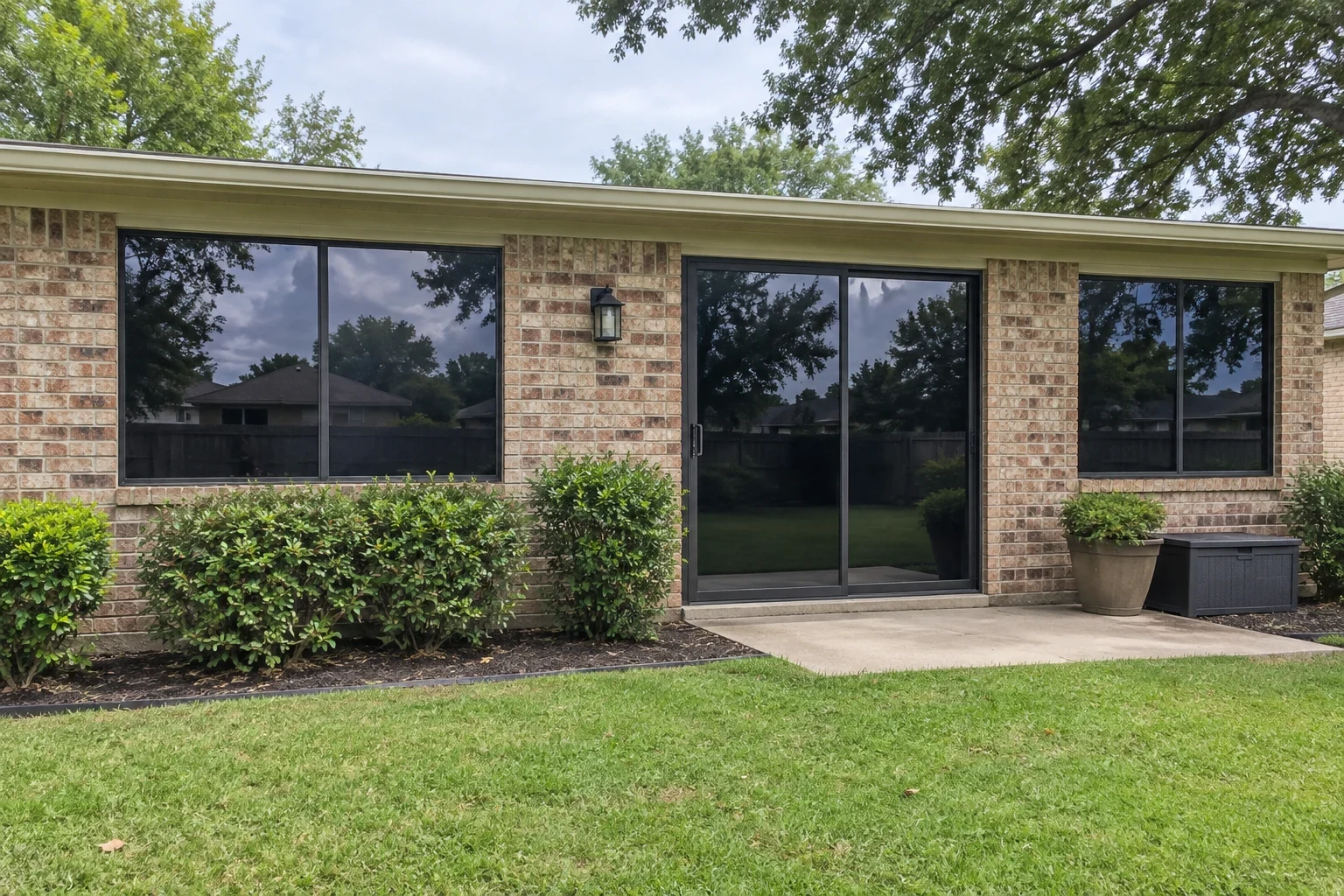
Privacy films work in one of two ways. Reflective and dual-reflective films carry a thin metalized layer that bounces back more light than it passes. From the brighter side, the glass reads as a mirror. That one-way effect depends entirely on light levels. During the day the outdoors is brighter, so people outside see a reflection. After dark, with lamps on inside, the effect reverses and the room becomes visible.
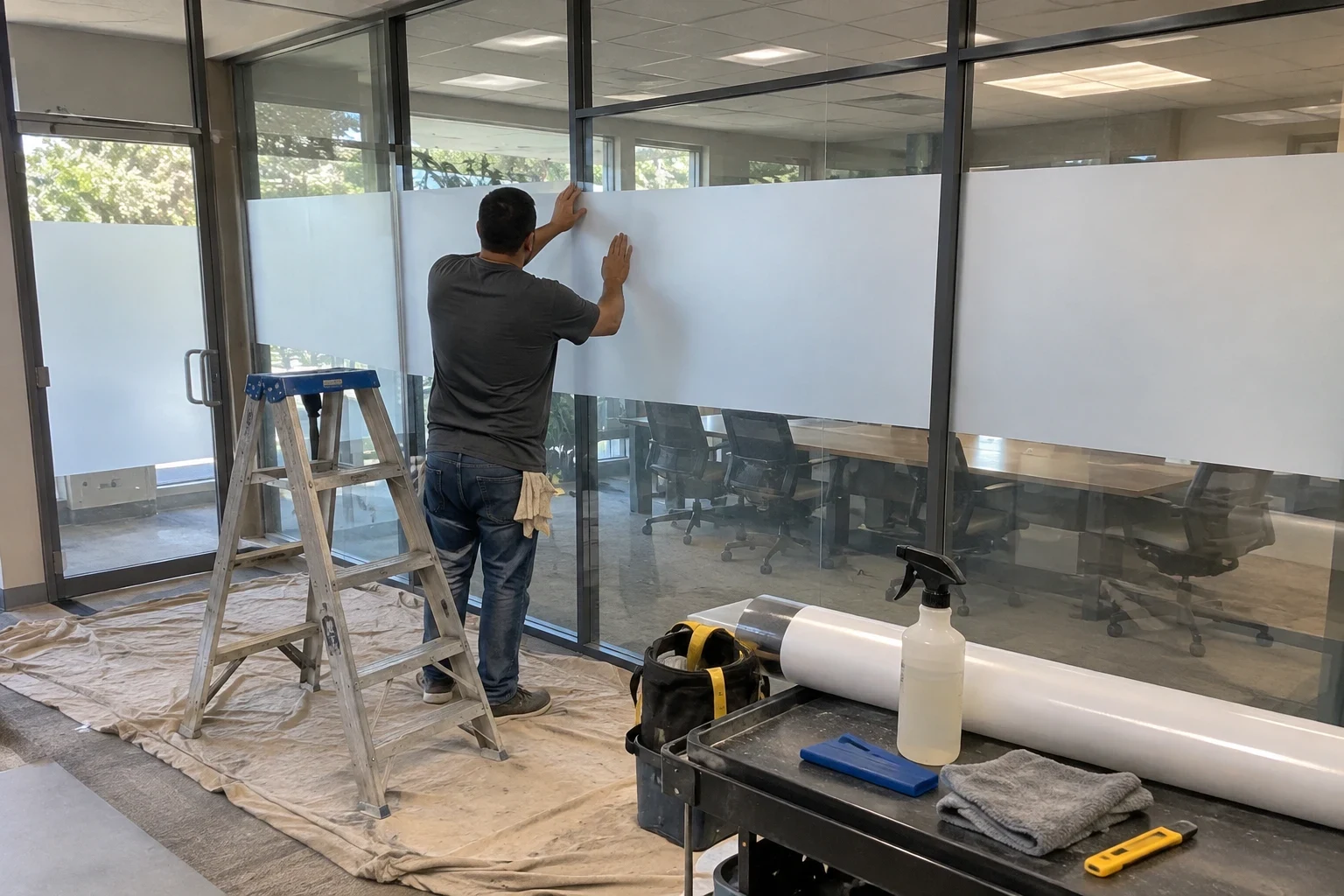
Frosted, matte white and blackout films diffuse or block light from both sides, so they keep a room private day and night, at the cost of a clear view. Most jobs combine the two: reflective or dark neutral film on windows you still want to see out of, and frosted film on bathroom glass, sidelights and glass entry doors. In our 8 years in business, the most common mistake we get called to fix is a bathroom window fitted with mirror film that turns see-through every evening.
What a privacy film job includes
- 01
Glass and seal check
We identify single or dual-pane units, low-E coatings and tempered glass before recommending anything. Dark, heat-absorbing film on large dual-pane glass raises thermal stress at the edges, so we choose a film rated for your glass type.
- 02
A room-by-room privacy plan
Each window gets a clear answer on daytime privacy, nighttime privacy and how much view you keep. You decide where a mirror finish makes sense and where only frosted film will do.
- 03
The right film for each opening
Options include dual-reflective film with a lower interior shine, silver reflective, dark neutral, frosted, matte white and full blackout. Many reflective privacy films also add heat rejection and UV protection, which matters on west-facing glass.
- 04
Partial and banded coverage
Frosted bands at eye level block the view in while the upper glass stays clear for light. This works well on tall bathroom windows, garage-facing glass and office partitions.
- 05
Clean, precise trimming
Film is cut a small, even distance from the frame gasket so it seats flat and does not lift at the edges. Exposed edges stay straight and consistent from pane to pane.
Questions about Privacy Window Tinting?
Call(281) 549-2845Signs privacy film is the right call
Shades shut from morning to evening
Keeping blinds closed just to block the view from the sidewalk trades away daylight for privacy. With film on the glass, you can raise them again.
A neighbor's window overlooks yours
A two-story house next door can look directly down into a back bedroom, kitchen or primary bath. Frosted or reflective film breaks that line of sight without heavy drapes.
Sidelights expose your hallway
Clear glass beside the front door gives anyone on the porch a view down the entry and into the house. Frosted or decorative film hides the interior and keeps the foyer bright.
A bathroom with plain clear glass
Some older builder-grade bathrooms came with untreated clear windows. Frosted film blocks the view after dark too, which a mirror finish cannot do.
Desks on display to the parking lot
In offices and storefronts, monitors, paperwork and meetings can be seen by anyone walking past. Privacy film takes the work out of view without darkening the space.
How the work goes, start to finish
- 1
Free phone consultation
Describe the rooms that feel exposed, which direction they face and whether the problem shows up by day, at night or both. That lets us shortlist films before the visit.
- 2
Measure, glass check and sample test
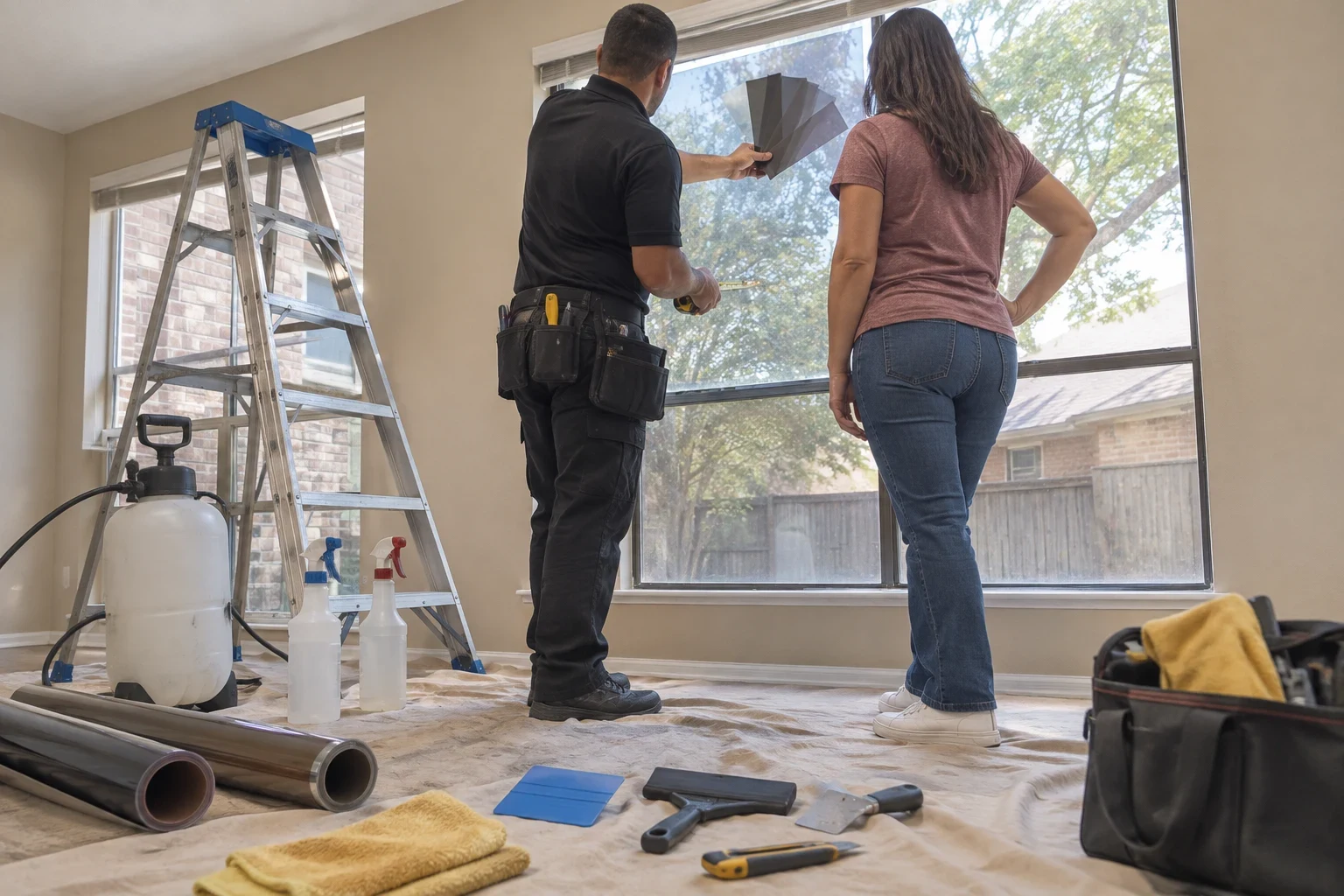
At your home we record the size of each pane, confirm the glass type and tape a piece of sample film to the window so you can judge the effect from indoors and from the yard. The written quote lists every window with its film.
- 3
Install day
Floors and sills get drop cloths. Each pane is scraped and washed, the film is floated on a slip solution, and the water is pressed out with a squeegee. Depending on pane count, a home usually takes a few hours to a full day.
- 4
Curing and care
Slight haze and small water pockets are part of normal adhesive curing and fade on their own. Humid Gulf Coast air can stretch that out, so give the film about 30 days before cleaning it, then use a soft cloth with a non-ammonia cleaner.
Why two privacy film quotes can differ
Every opening is measured and its glass type confirmed before we put a number on anything. The written quote then lists each window alongside the film chosen for it, so you can see exactly where the total comes from and nothing gets added on install day.
- Square footage and pane count
- Glass area drives most of the cost, followed closely by how many separate panes it is divided into. A window broken into many small lites needs far more cutting and edge trimming than one picture window with the same overall size.
- Which film goes on the glass
- Basic silver and dark films are the least expensive. Frosted, patterned and dual-reflective films cost more, and films that combine privacy with strong heat rejection are the priciest.
- Reaching the window
- Upstairs glass and transoms over a stairwell need ladders or staging to work safely. Bookcases, built-ins or heavy furniture parked against a window also add time to the job.
- Removing failed film first
- Old film that has bubbled or turned purple has to be stripped with steam and a scraper. Every bit of the old adhesive comes off too, because new film will not bond cleanly over it.
Privacy window tinting questions
Can people see in at night with mirror film?
Yes, once it is dark outside and your lamps are on. Reflective film mirrors toward whichever side has more light, so the effect flips in the evening. For bathrooms and bedrooms we suggest frosted or blackout film, or reflective film paired with blinds.
Will privacy film crack my double-pane windows?
The risk is real when a film is mismatched to the glass. Highly absorptive dark films warm the outer pane unevenly, and that stresses both the glass and its seal. We identify your glass before choosing a film and install only products rated for it.
Will my HOA allow a mirror finish?
Some homeowner associations restrict mirror-like films on windows facing the street. Adding film to an existing home usually needs no city permit, but HOA guidelines still govern how it looks. Review your rules, and we can point you to dual-reflective or lower-reflectance films that read close to ordinary glass from outside.
Do you install privacy film in offices and storefronts?
Yes. With 16,412+ commercial tint jobs completed, we have filmed conference rooms, glass partitions, reception areas and street-facing storefronts. Our office window tinting and commercial window tinting pages go into more detail.
Can privacy film be removed later?
Yes. Frosted and reflective films peel away, and we clean off the leftover adhesive so the glass is left clear. That makes film a sensible choice for rooms whose use may change down the road.
Get privacy without giving up daylight
Let us know which rooms feel exposed and at what time of day. We will match a film to each window and show you how it looks from inside and out before any film is applied.