ServicesCeramic Window Film
Ceramic Window Film in Friendswood
Ceramic window film uses nonmetallic nano-ceramic particles to block infrared heat and nearly all UV while keeping glass clear and barely reflective. We check whether your glass is single-pane, dual-pane or low-E, then match a shade that cools the room without darkening it.
What ceramic film does differently
Much of the warmth pouring through sunlit glass arrives as infrared energy, which the eye never sees. Older dyed films absorb visible light and drift toward purple as they age. Metalized films reflect heat with a thin metal layer, which makes glass look like a mirror and can weaken cell and Wi-Fi signals. Ceramic film carries tiny ceramic particles in its adhesive or coating layer. Those particles absorb and scatter infrared, so even a fairly light film can turn away a large share of solar heat.
That matters on the long, humid summers we get here, when west-facing rooms heat up by late afternoon and the AC runs without a break. A light ceramic film lets you keep the view and the daylight while cutting the heat load on that glass. It also blocks the UV that fades hardwood, rugs and furniture.
We have been installing window film for 8 years, in houses and in businesses, and ceramic is the product we reach for most when someone wants heat rejection without a dark or shiny window.
What a ceramic film installation includes
Glass and frame check
We identify the glass type, look for existing low-E coatings, gas-filled units and failed seals, and note any frames that would make a clean edge hard to get. This decides which films are safe for that window.
Film selection by numbers
We compare films by visible light transmission, total solar energy rejected and infrared rejection, not just by how dark they look. You see samples on your own glass so you can judge the tint in your actual light.
Glass prep
Each pane is scraped and cleaned to remove paint specks, mineral spots and dust. Debris left on the glass shows up as bumps under the film, so this step takes real time.
Precision cut and squeegee
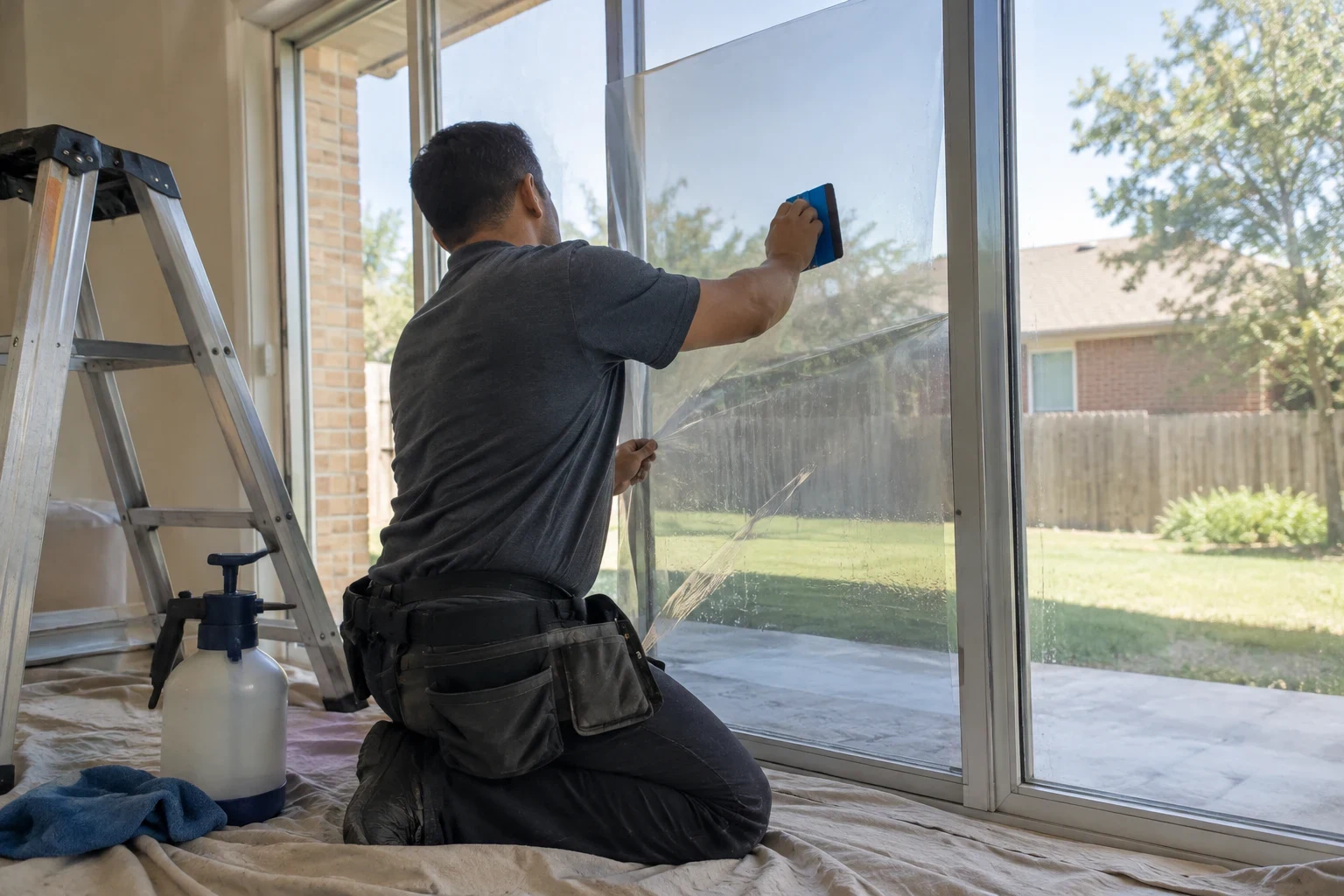
We cut each panel slightly short of the frame on every side, leaving a narrow, consistent border where trapped moisture can escape while the adhesive cures. The slip solution is then pushed out with a squeegee, working from the middle of the pane toward the edges.
Room protection and cleanup
We lay down towels or drop cloths at each window, move what you ask us to move and leave sills and floors dry.
Signs ceramic film is the right call
One room is always hotter
A bedroom or living room with big west or south glass that stays several degrees warmer than the rest of the house is a classic heat-gain problem. Ceramic film targets that infrared load directly.
Fading floors and fabrics
Lighter patches on hardwood, sun-bleached cushions and faded artwork are UV damage. Ceramic film blocks nearly all of it.
You want it to look untinted
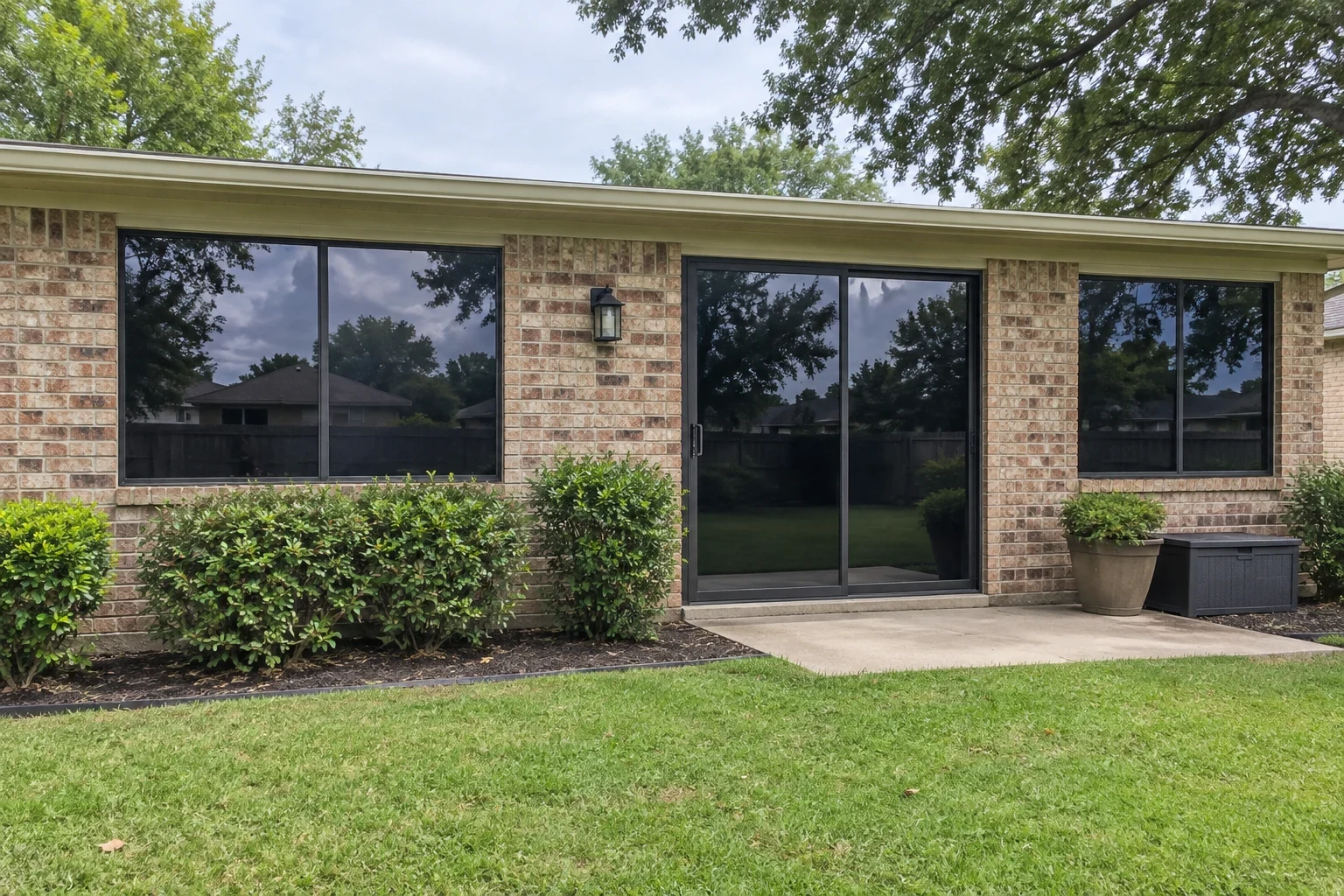
If your HOA or your own taste rules out a mirror finish, ceramic film keeps glass close to its original look from the street.
Weak signal near windows
If an earlier metalized film is hurting cell reception or smart-home devices, ceramic film has no metal layer to interfere.
Old film turning purple or bubbling
Dyed film breaks down in strong sun. We strip it, clean off the adhesive and replace it with a ceramic film that holds its color.
How the job runs
- 1
Consultation by phone
Start with a call and describe the rooms that run hot or glary, and what time of day it gets worst. From there we book a visit to see the glass in person and bring film samples along.
- 2
On-site measure and film match
We measure every pane, check the glass for thermal stress risk and show you two or three ceramic options with their heat and light numbers. You get a written quote before any work is scheduled.
- 3
Installation day
The number of panes sets the schedule: a handful of windows can be finished in a morning, while a whole house may fill the day. We work room by room so you are not displaced from the whole house.
- 4
Curing and care
Small water pockets or a light haze are normal for the first days or weeks, longer in humid weather, and they clear as the film dries. We ask you to wait about a month before cleaning the film, then use a soft cloth and an ammonia-free cleaner.
What moves the price of ceramic film
Nano-ceramic particles are harder to manufacture than the dyes in basic film or the metal in standard metalized film, so ceramic carries a higher material cost per square foot. After the film itself, the total depends mostly on the square footage of glass and the effort it takes to work on each pane safely. Each window gets its own line on the written quote, so you can see exactly what you are paying for.
- Square footage of glass
- Total glass area drives the price more than anything else. Two or three big picture windows can add up to the same footage as a dozen small ones.
- Film grade
- Ceramic lines are sold in tiers with different infrared rejection levels. The higher tiers block more heat at the same shade and cost more.
- Access and height
- Two-story foyers, transoms and windows behind built-ins call for ladders or scaffolding and take longer to do well.
- Removing old film
- Taking off failed film and scraping away adhesive that has baked onto the glass adds labor, and older film usually takes the most work.
Ceramic window film questions
Something not covered here? (281) 549-2845
Will ceramic film make my rooms dark?
Not unless you want it to. Ceramic particles work on infrared rather than visible light, so a film that passes most of your daylight can still cut a real share of the heat. We put samples on your glass so you can compare before you choose.
Can ceramic film crack my dual-pane windows?
Any film warms the glass it is applied to, and certain pairings of glass type and film absorption can lead to thermal stress. That is why we inspect the glass first and only recommend films rated for that kind of window. Lighter ceramic films tend to be the safer choice for insulated and low-E units.
Does it interfere with phones or Wi-Fi?
No. Ceramic film has no metal layer, so radio signals pass through it the way they pass through bare glass. Some metalized films can weaken reception, and avoiding that problem is a big reason customers choose ceramic.
Do you install ceramic film in businesses too?
Yes. We have completed 16,412+ commercial tint jobs, and ceramic film is a frequent choice for storefronts and offices that need less heat and glare without a mirrored look. Our commercial window tinting and office window tinting pages cover that work in more detail.
How is ceramic different from reflective or non-reflective film?
Reflective film relies on a thin sputtered metal coating that turns solar heat back outside, and from the street the window reads as a mirror. Ceramic film absorbs and scatters infrared instead, so its reflectivity stays low. If you are weighing those options, our reflective window film and non-reflective window film pages explain each one.
Find out which ceramic film fits your windows
We will look at your glass, test samples in your own light and give you a written quote with the heat numbers for each option. The consultation costs nothing.