ServicesNon-Reflective Window Film
Non-Reflective Window Film in Friendswood
Our low-reflectance window film rejects solar heat, glare and most UV while your glass keeps its everyday look from the driveway. No silver sheen outside and no mirror inside after sunset. You get cooler rooms, easier screen viewing and a clear view out at night.
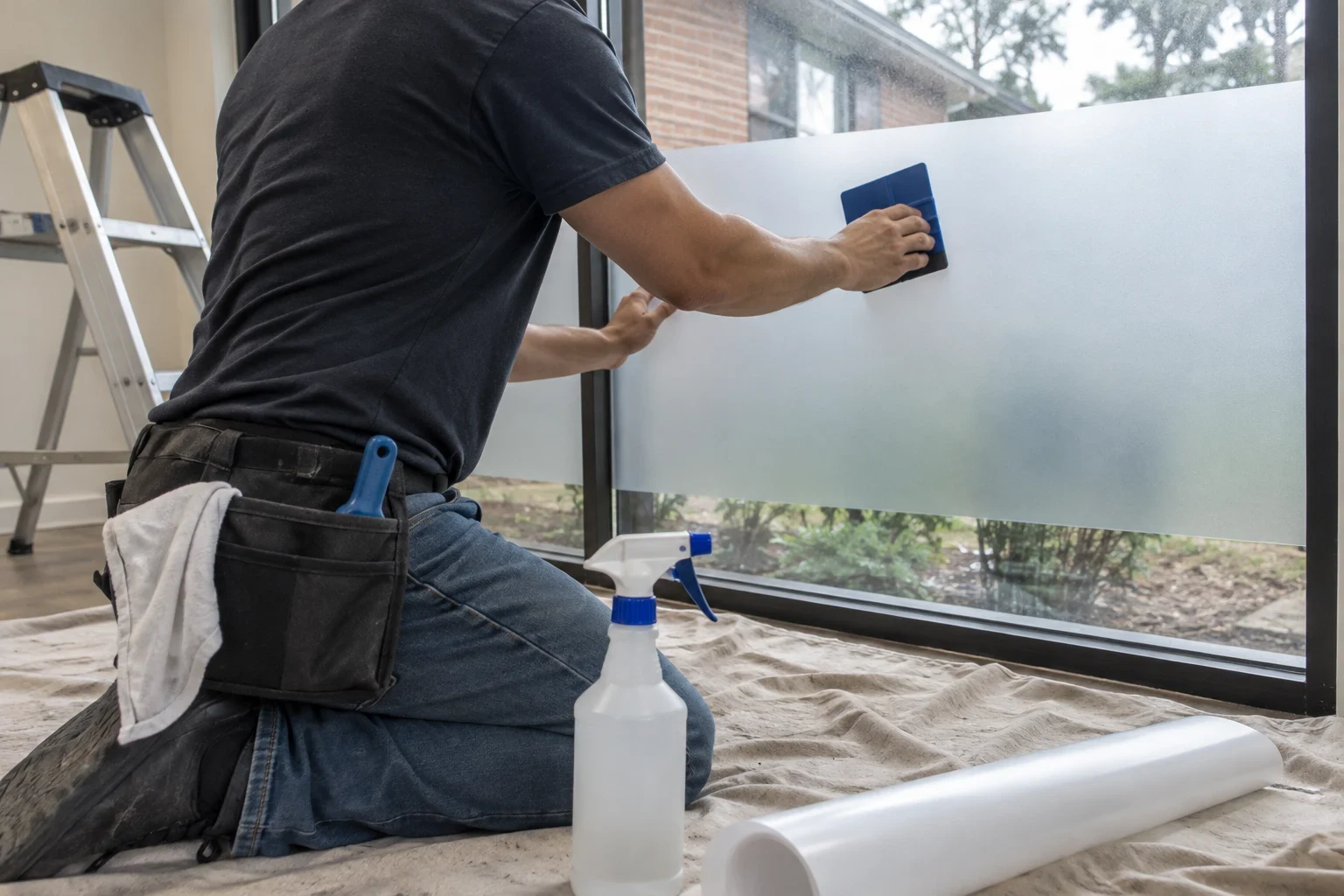
Heat rejection without the mirrored look
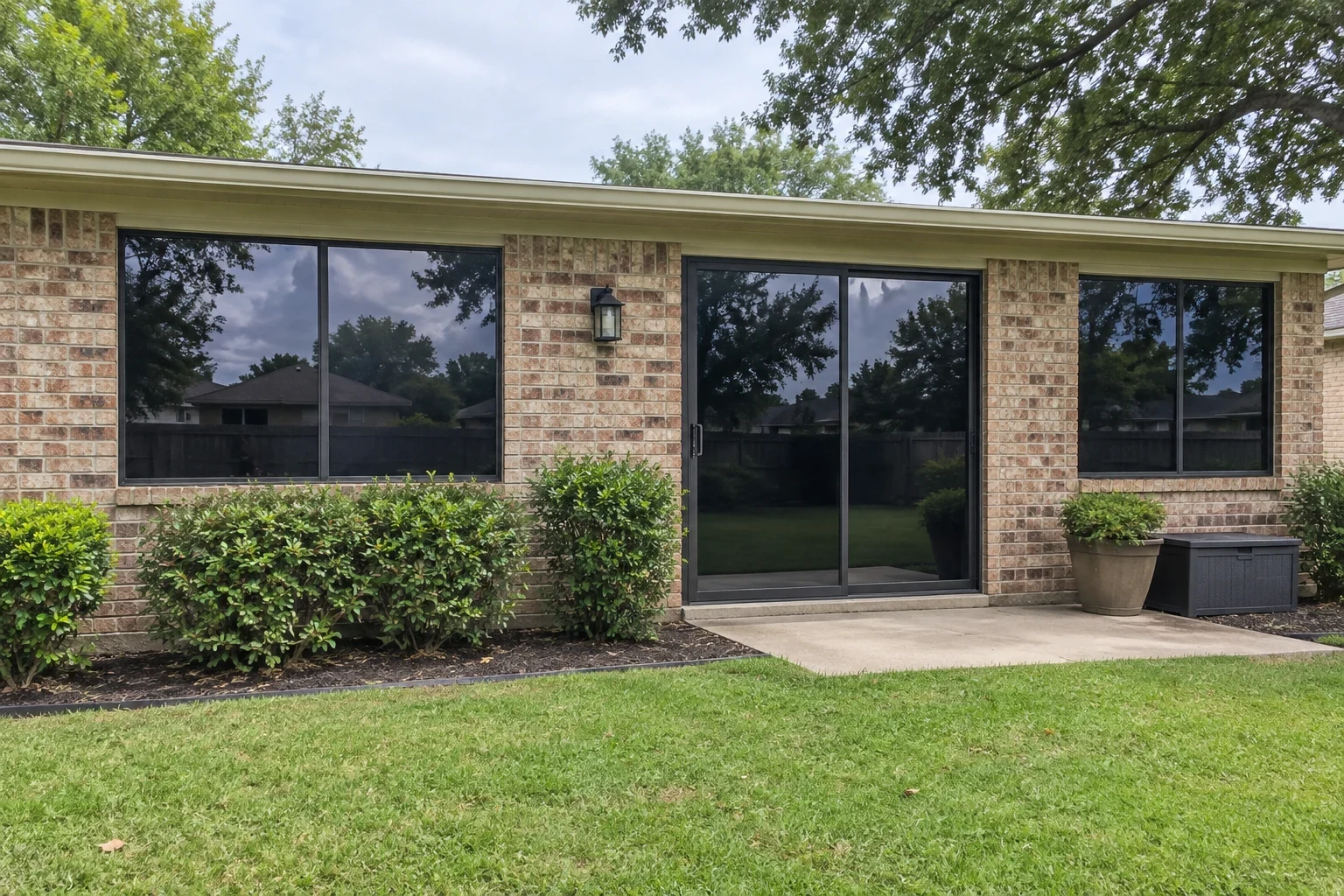
Traditional reflective film blocks heat by bouncing sunlight off a metalized layer. That works, but it gives the glass a silver or bronze sheen outside and a mirror effect inside once the lights come on after dark. Non-reflective window film does the job differently. It uses ceramic or other spectrally selective layers that absorb and reject infrared energy while letting visible light pass, so exterior reflectance stays close to plain glass.
It is the right call when you want energy savings and UV protection but your HOA restricts mirrored windows, or you simply like the way your house looks. Brick and siding homes around Friendswood with large west-facing windows are a common fit, since that late-day sun is where the heat load builds.
We have been fitting film for 8 years, and much of that work has been commercial. Across more than 16,412 commercial tint jobs, a lot of business owners asked for the same thing homeowners do: cooler glass that does not look tinted. That experience shapes which films we recommend for each window.
What the work includes
Glass inspection
Before quoting, we record whether each window is single-pane or insulated, clear or low-E, and what shape the edge seals are in. Absorbing films raise glass temperature, so this decides which films each pane can safely take.
Film matched to each side
A west window takes far more afternoon heat than a north one. We pick shade and heat rejection per elevation rather than running the same roll through every room.
Samples on your actual windows
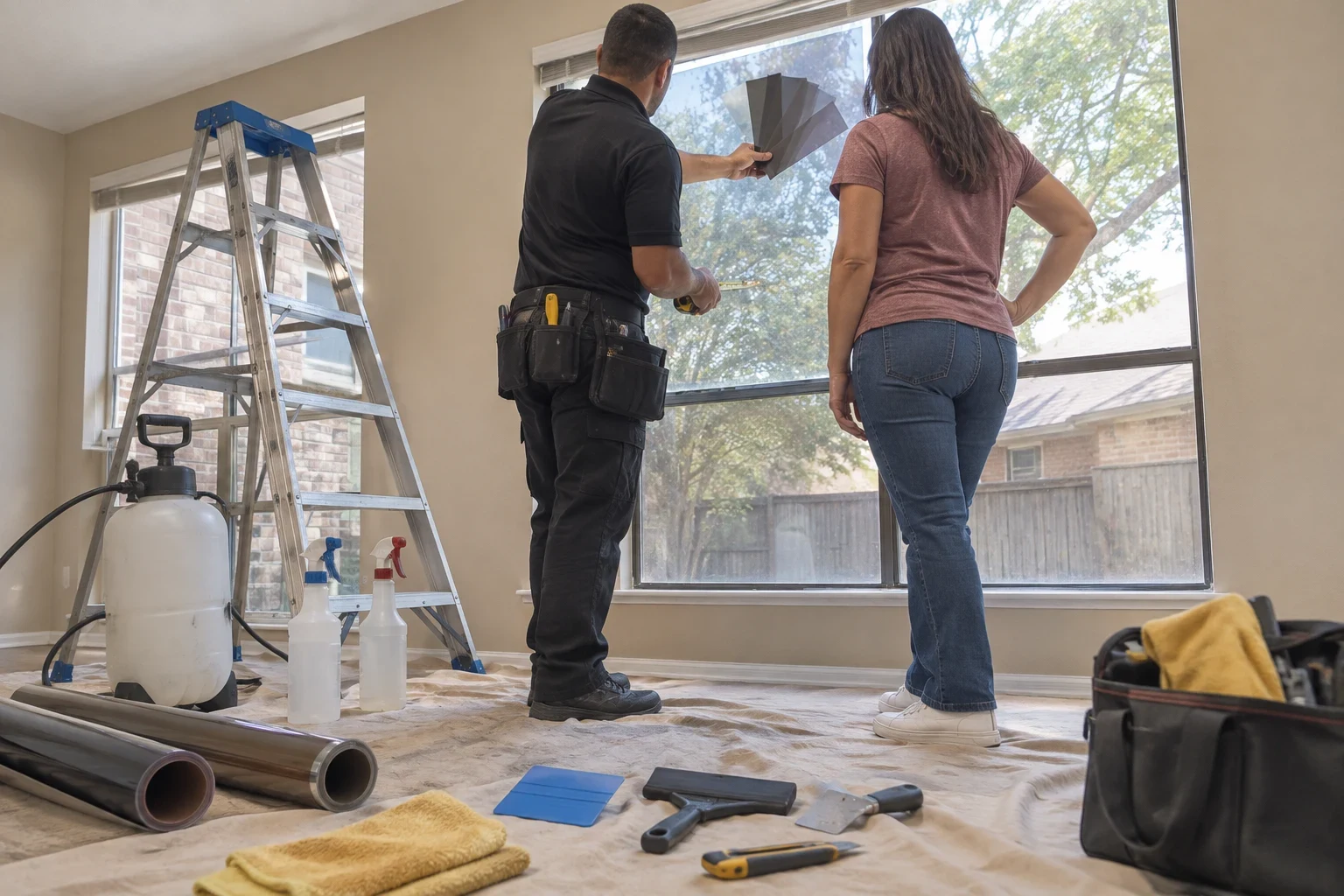
You see the film pressed to your own glass, judged from inside and from the yard, in the light your rooms really get.
Thorough glass prep
We razor-scrape and wash each pane to lift paint specks, dust and grit. Debris left under film is what usually causes bumps and trapped particles.
Careful trim and edges
We cut the film with a narrow, consistent margin inside the gasket so it can dry without curling. Then we work out the water and seat the edges by hand.
Cleanup and aftercare
Sills get wiped, drop cloths come up, and we tell you how long to wait before washing the filmed glass.
Signs non-reflective film fits your windows
- Rooms that overheat by afternoon
- When one side of the house runs warmer than the rest, infrared energy passing through the glass is the usual culprit.
- Your HOA limits mirrored tint
- Plenty of deed restrictions permit film but rule out a shiny exterior. A low-reflectance film is often the simplest one to get approved.
- Mirror effect at night bothers you
- Reflective film turns lit windows into mirrors after dark, so you lose the view outside. Non-reflective film lets you keep seeing out.
- Furniture and floors are losing color
- Washed-out rugs, pale spots on hardwood and faded cushions are signs of UV damage. Good films stop nearly all UV and still leave the room bright.
- Glare on screens without wanting dark glass
- A light film can take enough glare off a TV or monitor without making the room feel dim.
How the job runs
- 1
Phone consultation
You describe the rooms and the problem: heat, glare, fading or all three. We ask about window sizes, which way they face and any HOA rules, then set a time to look at the glass.
- 2
Measuring and samples on site
We measure each pane, identify the glass and test samples on your windows. The written quote names every window and the film chosen for it.
- 3
Installation day
Drop cloths go down beneath the glass, and we move only the furniture that blocks a window. We finish and tidy each room before starting the next. How many panes you have and how easy they are to reach decide the pace, and most homes are done in a single day.
- 4
Drying time and check-in
For a few days, sometimes a few weeks, the film may look slightly hazy or show tiny water pockets while the mounting solution dries. Humid weather slows that cure. We tell you what is normal and which signs mean you should give us a call.
What moves the price
Two things drive most of the cost: how much glass you have and which film goes on it. After we measure, the quote breaks the job down opening by opening. You know the cost of every window before any film is cut.
- How the film is built
- Ceramic and multilayer spectrally selective films carry a higher price than dyed films. The nano-ceramic particles and thin optical layers that block infrared without a metallic shine cost more to manufacture.
- Square footage of glass
- Each added pane means more film and more hours. Very wide picture windows can exceed roll width and need a seamed panel, which adds careful labor.
- Reach and obstructions
- Upstairs windows, transoms over a stairwell and glass tucked behind shelving call for tall ladders or staging. That slows the work and shows up in the labor line.
- Taking off failed film
- If an older film is bubbling, peeling or has turned purple, we steam it loose and strip the leftover adhesive before installing anything new. That removal is quoted as separate labor.
Non-reflective film questions
- Will this film actually keep heat out if it is not reflective?
- Yes. Ceramic and spectrally selective layers absorb and reject infrared energy, which accounts for a large share of solar heat. Most visible light still passes, so rooms keep their daylight. Performance differs from film to film, and we walk you through the published specs for each option.
- Is it safe on my dual-pane windows?
- In most cases, but the glass decides. Absorbing films run the pane warmer, and some insulated units handle that heat better than others. We confirm the glass type and the window manufacturer's guidance before we recommend a specific film.
- Can neighbors see into the house with non-reflective film?
- A light non-reflective film adds little daytime privacy. If keeping eyes out is the priority, Privacy Window Tinting or Decorative Window Tinting will serve you better. We can mix them, using non-reflective film on view windows and a privacy option on a bathroom or street-facing pane.
- Do I need a permit or HOA approval?
- Window film on a house generally does not require a building permit. Many HOAs do set rules for how windows look, so check your deed restrictions first. Low-reflectance film is often approved where mirrored tint is not, and if you call us we will read you the reflectance and shade numbers your HOA usually asks for.
- How is this different from your Reflective Window Film?
- Reflective film blocks more heat at a given shade, but the outside face looks like a mirror. Non-reflective film trades a little peak heat rejection for glass that looks natural. During the consultation we can put both against your window so you can compare.
See the film on your own glass
We come out with samples, look over each window and hand you a quote that lists every opening. There is no charge for the visit or the advice.