ServicesSecurity Window Film
Security Window Film in Friendswood
We install thick, clear security film that bonds to the inside of your glass and holds it together when it breaks. A pane that would shatter in seconds becomes a cracked sheet that takes real effort to push through. You also get UV protection from the same film.
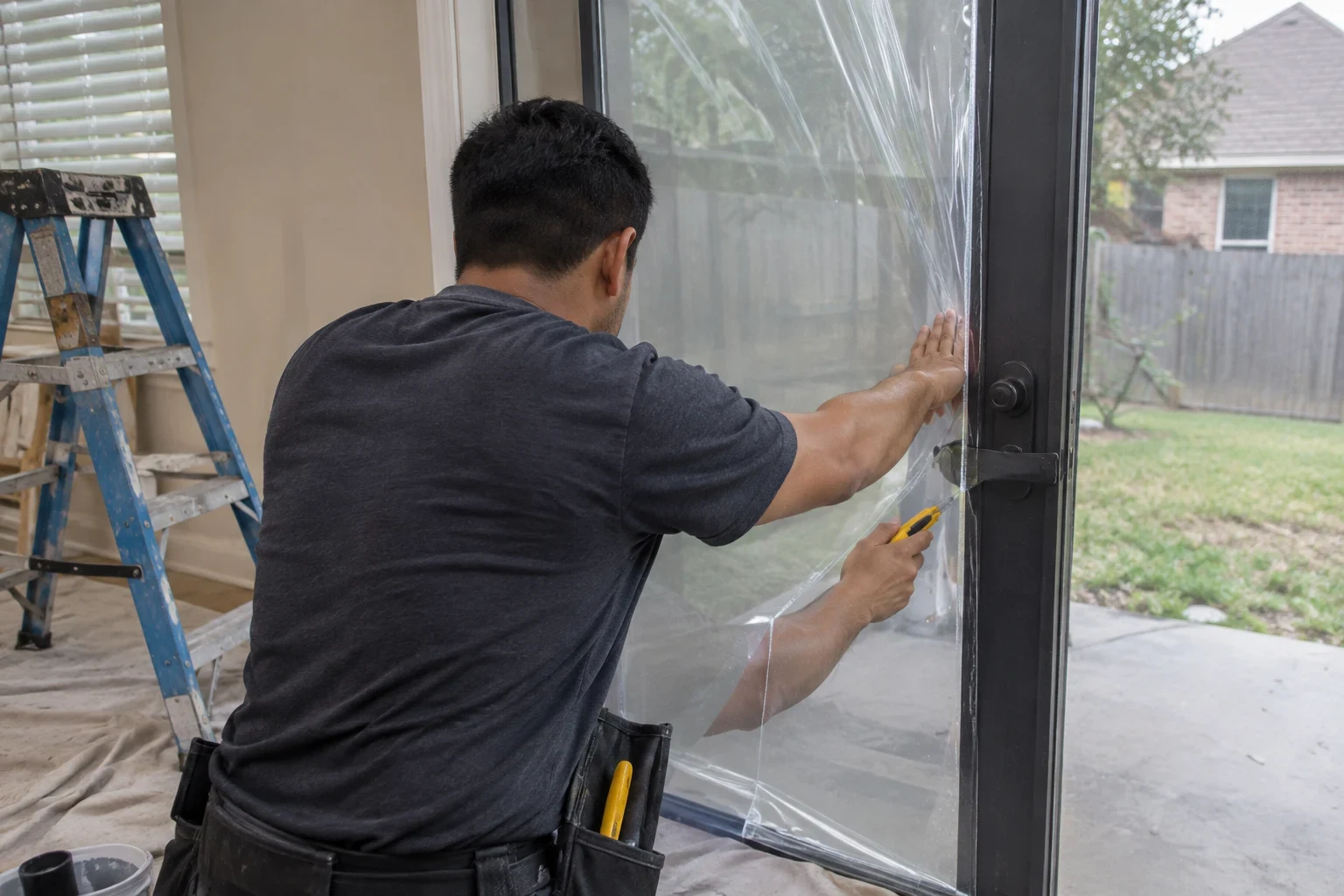
What Security Film Does and What It Does Not
Security film is a multi-ply polyester laminate, usually 7 to 14 mils thick, with an aggressive pressure-sensitive adhesive. Standard tint is around 2 mils. That extra thickness and the stronger adhesive are why the glass stays stuck to the film after impact instead of falling out in pieces.
The film does not make glass unbreakable. What it buys you is time and noise. Someone trying to get through a filmed sidelight or sliding door has to keep striking the same spot, and most give up. It also keeps shards from scattering across a room when a ball, a fallen branch or a storm-driven object hits the window.
Be careful with anyone who sells film as hurricane protection. On its own it does not meet windborne debris requirements, so it does not replace shutters or impact glass. We tell you that up front and help you decide where film makes sense and where it does not.
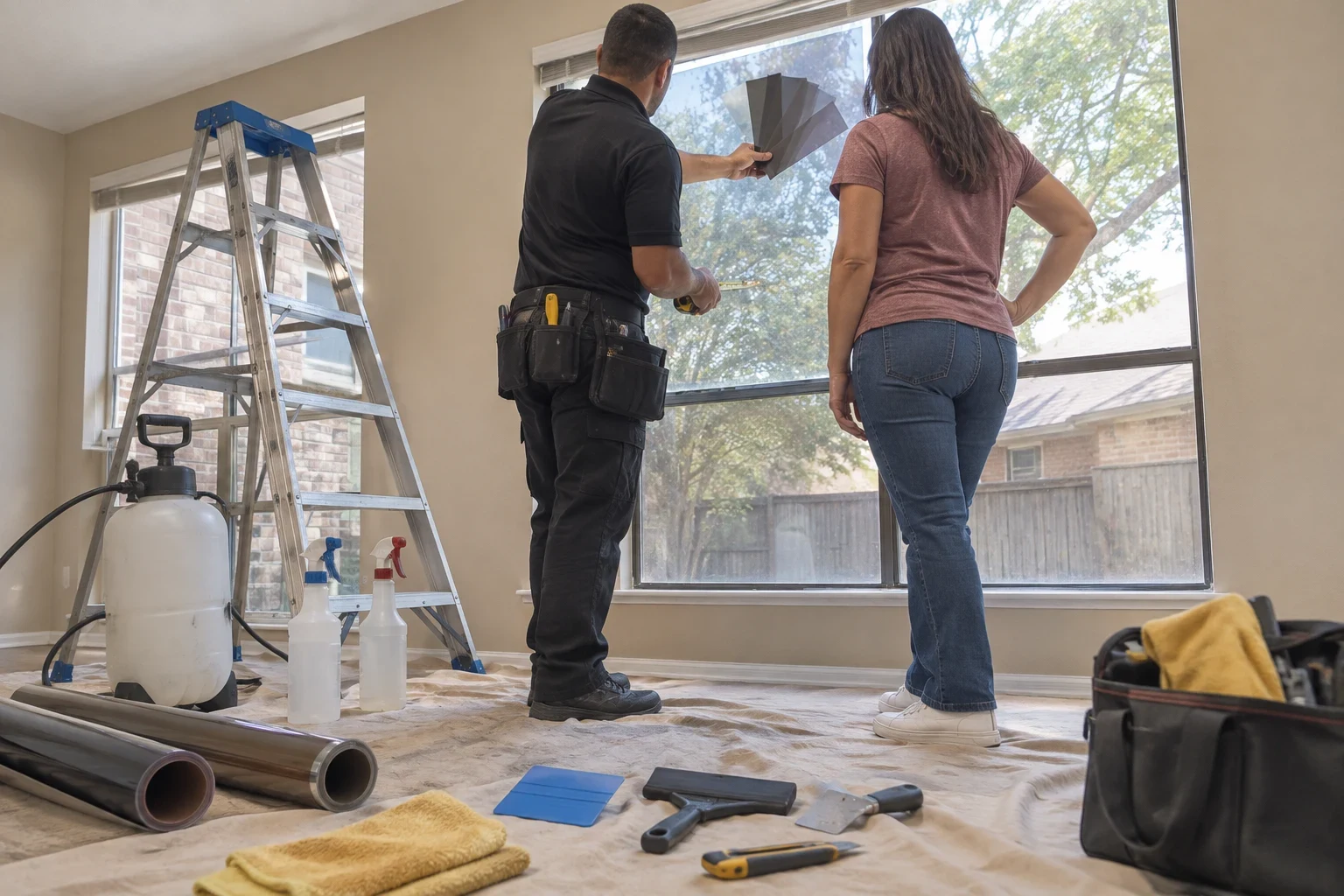
What Your Security Film Installation Includes
- 01
Glass type and frame review
Before we pick a film, we identify each pane as annealed, tempered or part of a sealed dual-pane unit. The glass type sets the safe film thickness and tells us whether sun-facing panes carry a thermal stress risk.
- 02
Film thickness matched to the opening
Ground-floor sliders, French doors and the sidelights beside entry doors usually get the heavier film. Upper windows that mainly need shard retention can use a thinner, lower-cost film.
- 03
Edge-to-edge application
We trim film as close to the gasket as the frame allows. A wide gap at the edge is where glass can still fail, so the cut matters as much as the film.
- 04
Optional frame attachment
For openings where you want the glass held in the frame, we can add a structural silicone attachment that ties the film to the frame. This keeps the whole sheet from being pushed in once it cracks.
- 05
Protection and cleanup
We lay drop cloths, move what needs moving and squeegee the water out cleanly. We haul off backing liners and trim when we leave.
Questions about Security Window Film?
Call(281) 549-2845Signs Security Film Is Worth a Look
Glass right next to a lock
A sidelight or door panel within arm's reach of the deadbolt is the most common entry point. Break the glass, reach in, turn the lock. Film makes that much slower.
Large sliding glass doors
Many homes around Friendswood have big rear sliders facing a fenced yard, out of view from the street. Those panels are an easy, quiet target without film.
A storefront on the ground floor
Display windows and glass entry doors take smash-and-grab attempts. Film keeps the glass in place longer while the alarm does its job.
Kids or pets near low glass
Older annealed glass fails in long, jagged slivers. With film on the inside surface, those slivers stay stuck to the sheet instead of dropping where a child or pet could step.
You already want heat or UV control
Many security films come in tinted or ceramic versions, so one film can handle shard retention and solar control on the same window.
How the Job Runs
- 1
Phone consultation
You tell us which openings worry you and why. We talk through film thickness, attachment options and what a visit will look at.
- 2
On-site measurements
We measure every pane, note glass type and check frame condition. You get a written estimate broken out by opening.
- 3
Glass prep
We scrape and wash every pane until paint flecks, grit and leftover glue are gone. Thick film magnifies anything trapped beneath it, leaving a visible bump and a weak spot in the adhesive.
- 4
Install and attach
We wet-apply the film, squeegee out the solution and trim to the gasket. If you chose frame attachment, the silicone goes on last and needs time to set.
- 5
Curing
Expect some haze or small water pockets at first. Thick film cures slower than tint, and our Gulf Coast humidity stretches that out, so hold off on cleaning the inside for about a month.
What Moves the Price of Security Film
Per square foot, security film runs higher than standard tint. The film is heavier, and handling and trimming it simply takes more time on each pane. Your total comes down to how many openings get film and how each one is protected. You get a line-item estimate before any work starts.
- Film thickness
- A 14-mil film costs more than an 8-mil film and takes longer to handle and trim. We match thickness to the risk at each opening instead of using the heaviest film everywhere.
- Frame attachment
- Adding structural silicone attachment adds material and labor per opening. It is often worth it on doors and ground-floor glass, less so upstairs.
- Pane size and access
- Very large panes need two installers. Transoms and high windows need ladders or staging, which adds time.
- Glass condition
- Paint overspray, hard water spots or old film removal add prep time before the new film goes on.
Security Window Film Questions
Will security film stop a break-in completely?
No, and nobody should promise that. It turns a quick smash into a slow, noisy job that most intruders walk away from. Paired with good locks and an alarm, it closes off the easiest way in.
Can I put security film on dual-pane windows?
Usually yes, but we check the glass first. Thick film absorbs some heat, and on sun-facing sealed units that can add thermal stress. We follow the film maker's glass compatibility guidance and steer you to a safer film where needed.
Do you put security film on businesses too?
Yes. We have been in business for 8 years and have completed 16,412+ commercial tint jobs, and storefront glass is a common place for security film. We plan the work around your open hours so the entrance stays usable.
Is the film noticeable once it is on?
Clear security film is hard to spot from a normal distance. You may see the trimmed edge near the gasket up close. If you also want privacy or heat rejection, tinted versions are available.
Does it help during storms?
It helps hold cracked glass together and reduces flying shards inside the room. It is not a substitute for shutters or impact-rated windows during a hurricane, and we will not sell it as one.
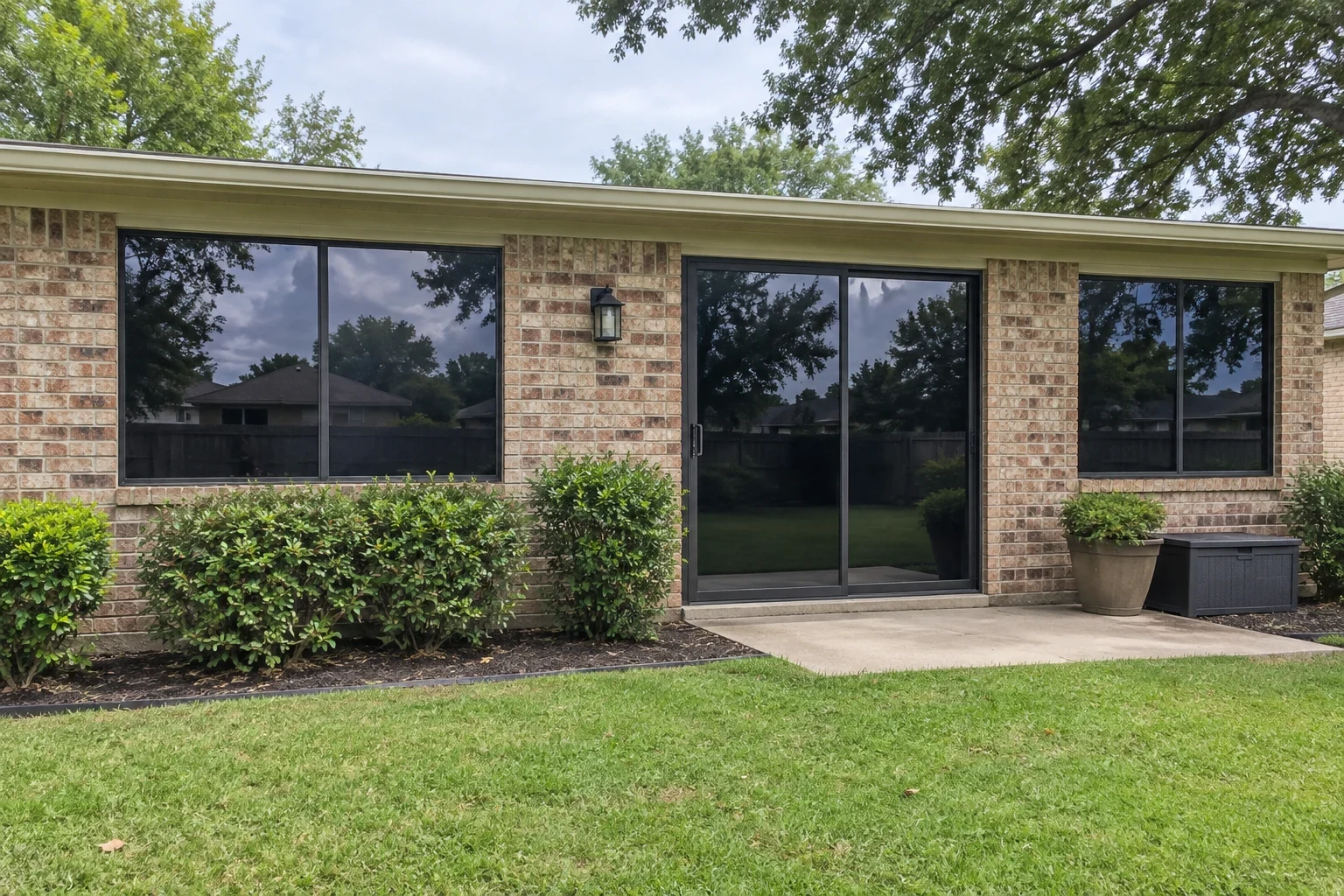
Find Out Which Openings Need Film
Tell us about your doors, sidelights and storefront glass, and we will explain which film fits each one. We serve Friendswood and nearby towns like Pearland and League City.