ServicesCommercial Window Tinting
Commercial Window Tinting in Friendswood
We install window film on storefronts, office suites and commercial glass to cut solar heat, control glare and block UV that fades merchandise and furniture. We match the film to your glass type and sun exposure, then schedule the work around your business hours.
What commercial window film does for your building
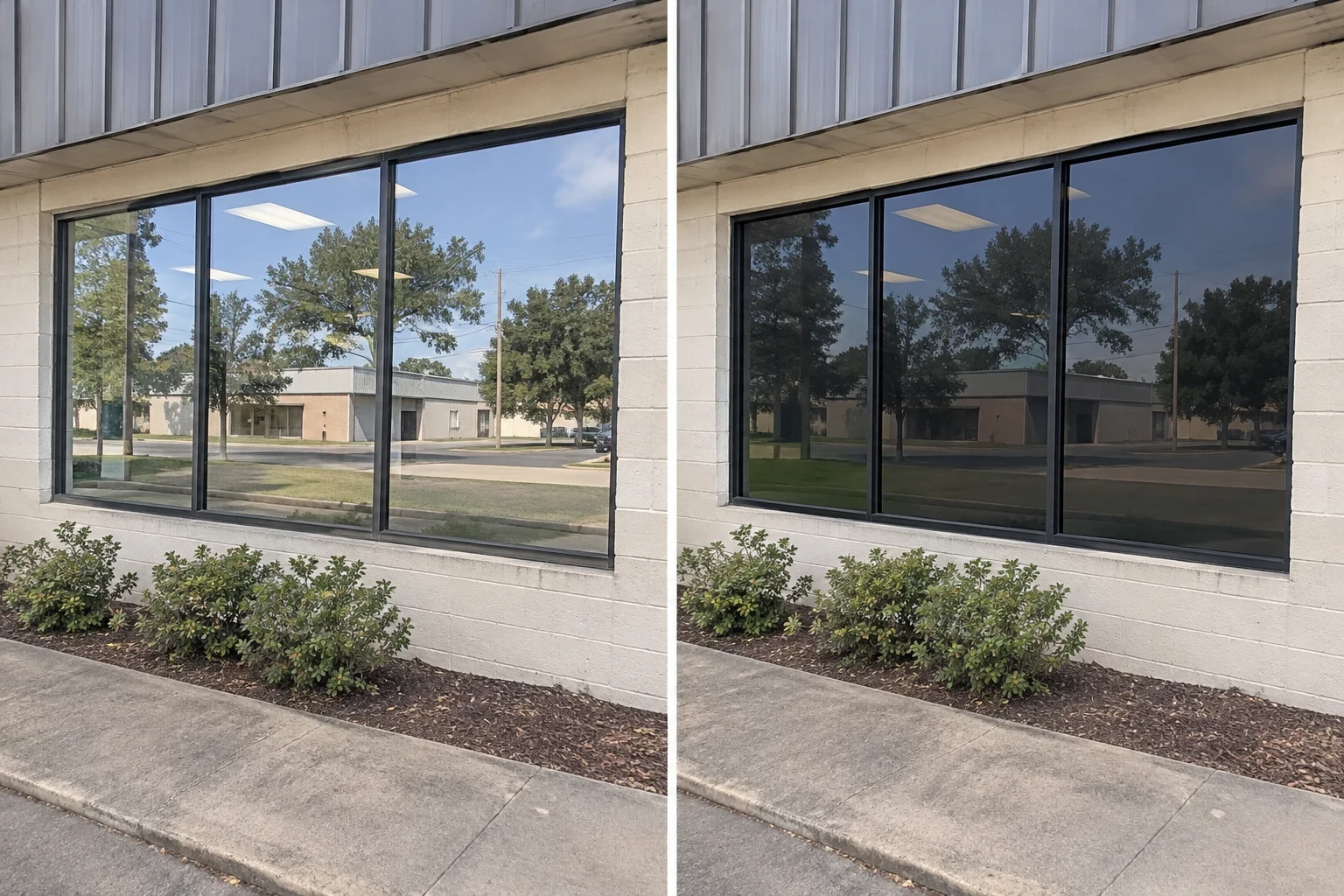
In a glass-fronted business, most of the unwanted heat arrives through the windows as solar radiation. A spectrally selective or ceramic film turns back much of that infrared energy and blocks almost all UV, so the HVAC system is no longer battling a west-facing wall of glass every afternoon. Staff can read their screens, customers stop squinting at the counter, and displays near the window hold their color longer.
We have 8 years in business behind us and 16,412+ commercial tint jobs completed. That volume matters for one reason: we have seen how different films perform on the glass you actually have, from single-pane storefront glazing to tinted insulated units in newer buildings.
Commercial work also covers more specific needs. We handle office window tinting for interior suites, security window film for ground-floor glass, and decorative window tinting for conference rooms and branding.
What the job includes
Glass and exposure survey
We record each pane's type, size and orientation and look for low-E coatings, existing tint or failed seals. A dark, highly absorptive film on large annealed or insulated glass can push edge temperatures high enough to cause a thermal stress crack, so this survey decides which films are safe to use.
Film selection with real numbers
We compare options by visible light transmission, solar heat gain and visible reflectance rather than by shade name. You can choose reflective window film for maximum heat rejection or non-reflective window film for a clear, natural look from the street.
Removal of old or failed film
Bubbled, purple or peeling film is steamed and scraped off, and every trace of glue comes off with it. New film will not bond properly over leftover adhesive.
Careful installation
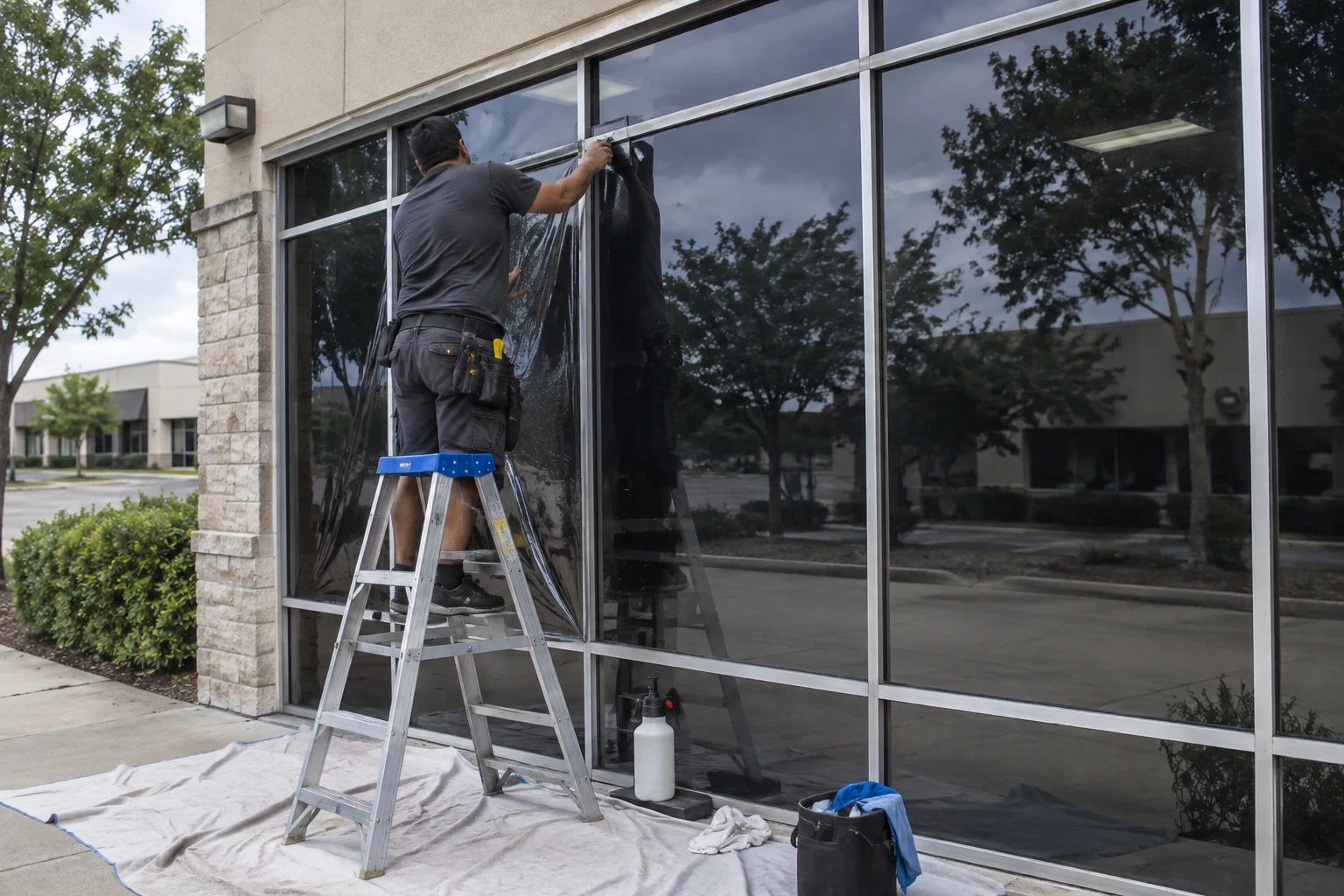
Each pane is scraped and cleaned, then the film goes on over a slip solution and is squeegeed flat to push out water and air. We cut the film just short of the frame on every side, leaving a narrow margin so the edge never rides up onto the gasket and starts to peel.
Cleanup and care instructions
We wipe down sills, haul away all scrap and leave written notes on curing time and how to clean the film without scratching it.
Signs your business needs window film
- Some rooms never cool down
- If the front of the store or the west offices run several degrees warmer than the rest of the building, solar gain through the glass is usually the cause, not the AC unit.
- Glare on screens and registers
- Low morning or evening sun washing out monitors and point-of-sale screens is a direct productivity problem that film fixes without closing blinds.
- Faded stock and finishes
- Bleached packaging, sun-streaked carpet or yellowed vinyl near the windows points to UV exposure. Quality film blocks 99 percent of UV, which slows that damage considerably.
- Old tint that has gone bad
- Bubbling, purple discoloration or film peeling at the corners means the adhesive or dye layer has broken down and should be replaced.
- Customers can see too much
- Back offices, storage areas or exam rooms facing a parking lot may need privacy window tinting or a frosted film instead of blinds.
How a commercial install runs
- 1
Free consultation by phone
You tell us about the building, the problem and your hours. We set a time to look at the glass in person.
- 2
On-site measurements and options
We measure every pane, check glass type and sun exposure, and show film samples on your actual windows. You get a written quote that lists each area and film.
- 3
Approval and scheduling
Window film generally does not need a building permit, but many leases and property managers require sign-off, and we can supply film specs for that request. We schedule before opening, after closing or on a slower day so customers are not disrupted.
- 4
Installation day
We move what needs moving, lay drop cloths along the sills and work section by section. Most storefronts are finished in a single visit.
- 5
Curing and walkthrough
Film looks slightly hazy for a few days while moisture trapped behind it evaporates; in Gulf Coast humidity that can take a few weeks. We walk the job with you before we leave.
Where your commercial film budget goes
A commercial quote is built from the glass you have and the film it needs, so there is no single flat rate per building. We price each area as its own line, which shows you exactly what each wall of glass costs and lets you phase the job if that fits your budget better.
- Square footage and pane size
- Total glass area sets the baseline. Oversized panes call for wider film rolls and an extra installer to handle the sheet, which adds labor.
- Film type
- Ceramic window film and premium spectrally selective films cost more than dyed or metalized films. In return they reject more heat with less darkening and cause no cell or Wi-Fi signal interference.
- Access and height
- Ground-level storefront glass goes quickly. Clerestory windows, atriums and second-story glass need tall ladders or a lift.
- Removal of existing film
- Taking off old film and its adhesive can take as long as the new install, particularly when years of sun have baked it onto the glass.
- After-hours scheduling
- Working before opening or on weekends so your doors stay open can change the schedule and the quote, and we tell you that before you approve anything.
Commercial window tinting questions
- Will window film darken my storefront too much?
- Not if the film is chosen correctly. Modern ceramic and spectrally selective films reject much of the solar heat while still passing most visible light. We apply samples to your glass so you can judge the look from inside and from the parking lot before you commit.
- Can film crack our windows?
- It can if the wrong film goes on the wrong glass. Absorptive films on large, partly shaded or insulated panes heat unevenly, and that puts stress on the edges. That is why we identify each glass type first and only recommend films rated for it.
- Can we stay open during the install?
- In most cases, yes. The crew finishes one run of glass before moving to the next, so only a small area is off-limits at any time, and early mornings, evenings or weekends are available if you would rather keep the floor clear. The only liquid involved is a mild soap-and-water slip solution, so there are no strong odors for staff or customers.
- How much will it lower our energy bills?
- The savings depend on your total glass area, the direction each wall faces and how your HVAC system is zoned, so we will not promise a percentage. In our hot, humid climate, businesses with large south- and west-facing glass usually see the biggest change in comfort and cooling load.
- Do you work outside Friendswood?
- Yes. We install commercial film throughout the surrounding area, including League City, Pearland, Webster, Alvin and Deer Park.
Get a film plan for your building
We will look at your glass, explain which films are safe and effective on it, and give you a written, line-by-line quote. The consultation costs nothing.