ServicesOffice Window Tinting
Office Window Tinting in Friendswood
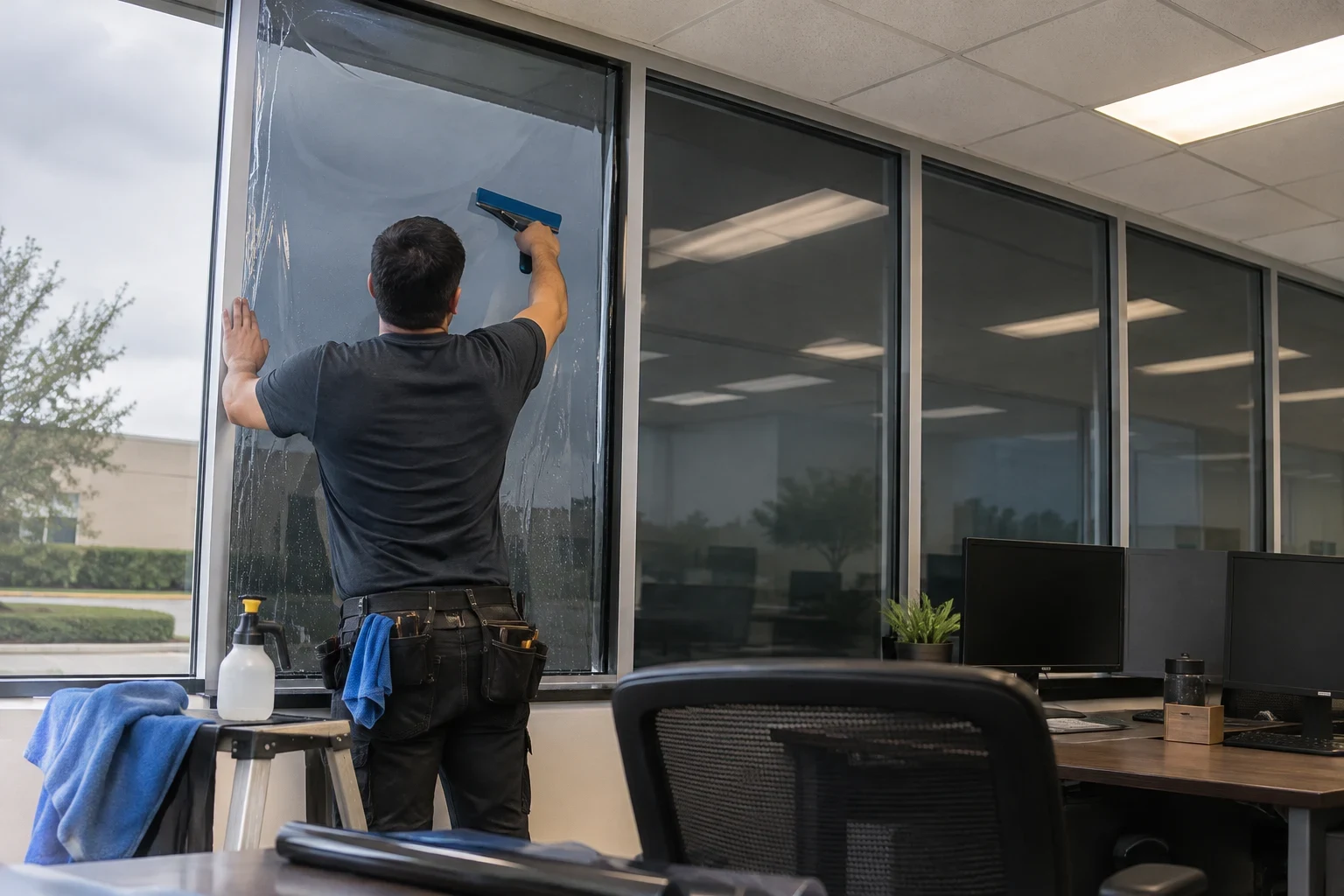
We install window film on office glass to cut monitor glare, take the heat load off sun-facing rooms and block most of the UV that fades carpet and furniture. You get a film recommendation for each window, an install planned around your workday and clean glass when we leave.
Film that fixes how the office works
Office complaints about windows usually trace back to two things. By mid-afternoon, solar heat comes through the glass faster than the air conditioning can pull it out, and glare turns monitors into mirrors. Window film deals with both right at the pane, before that energy reaches the room. A spectrally selective ceramic film turns away much of the infrared while passing most visible light, so the space stays bright and nobody has to keep the blinds drawn.
The technical work is picking the film. Insulated dual-pane units, tempered storefront glass and older single-pane windows each take on heat in their own way. Put a deep-tinted film that soaks up a lot of solar energy on the wrong unit, and the middle of the pane heats faster than the edges held cool in the frame, which strains the glass. So we confirm the glass type and the sun exposure on every side of the building before recommending a film. With 8 years in business through Gulf Coast summers, we know which films stand up to that much sun and humidity.
What an office tint job includes
Glass and exposure survey
We record the glass type, frame and compass direction of every window. East and west panes catch the low morning and late-day sun that causes the worst glare, and south glass soaks up steady heat through the middle of the day.
Film matched to each room
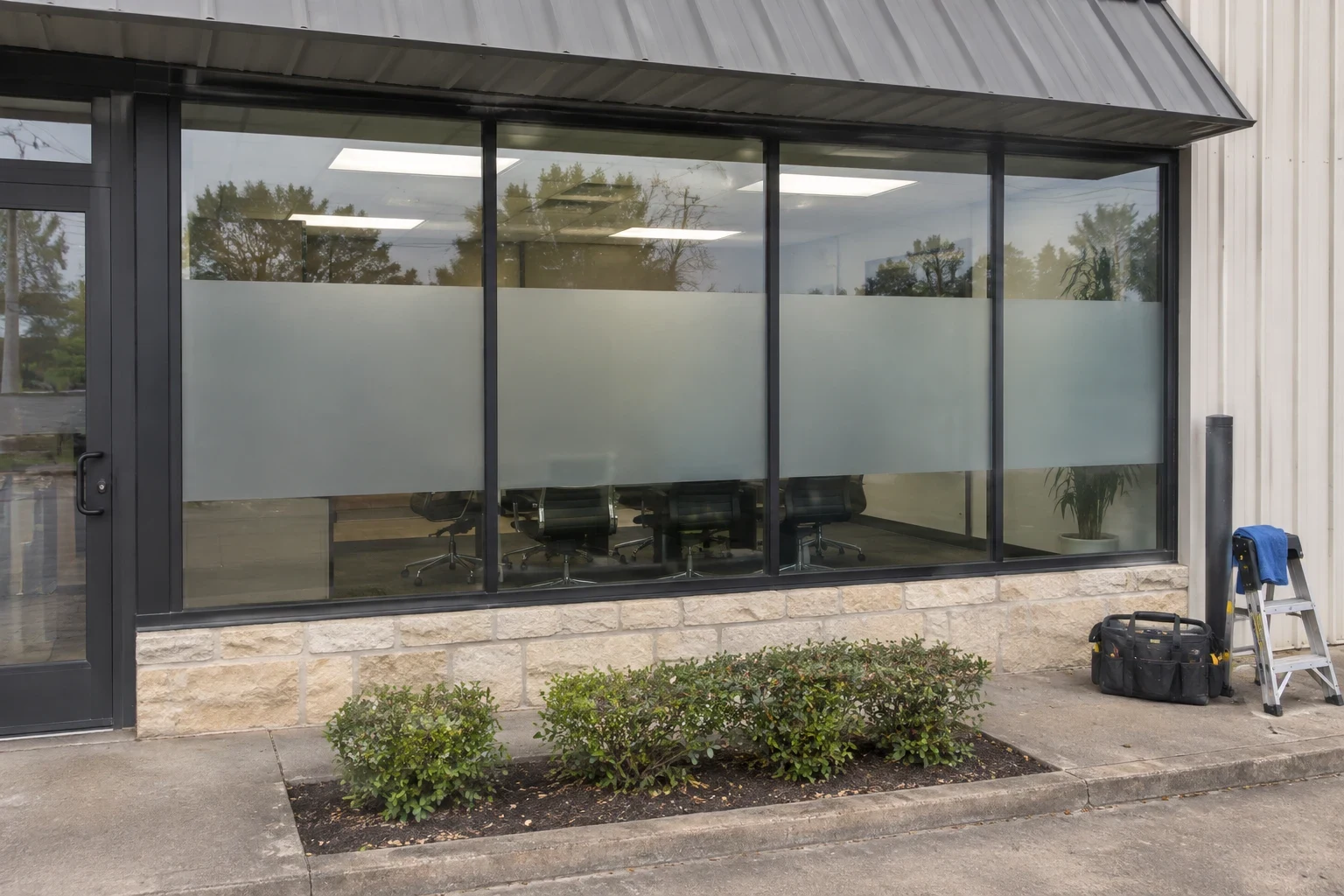
Ceramic film goes where you want heat rejection without a mirrored face. Reflective film suits rooms with severe heat where the building's exterior can take it, and non-reflective film fits when the landlord wants the glass to look the same from outside. Interior glass walls around conference rooms can get privacy or decorative film.
Covering desks and equipment
We clear the sills, drape computers and papers near the windows, and put down drop cloths for the slip solution we spray on every pane.
Careful edge trimming
We cut the film to stop about 1/16 inch short of the gasket or frame, with an even margin all the way around. Glass grows and shrinks as it heats and cools, and that small margin keeps the film edge from catching and peeling.
Cleanup and cure guidance
Sills and frames get wiped down, and the liner and offcuts leave with us. We also explain the cure: a light haze or a few small water pockets show up early and clear on their own as the film dries.
When office glass starts working against you
Staff keep the blinds closed
When people shut the blinds just to see their monitors, the daylight you pay for goes unused. Film brings glare down far enough that the blinds can stay open.
Some rooms run warm, others cold
A space heater under one desk and a fan on another usually means solar gain through the sunny side of the building. Your HVAC cannot balance a load that lopsided, and film trims it where it starts, at the glass.
Furniture and displays are fading
UV and strong visible light bleach upholstery, wood finishes and printed signage near the windows. Most window films stop the large majority of UV before it reaches them.
Passersby can see desks and screens
This is common in ground-floor offices that face a parking lot. Reflective or privacy film cuts the daytime view inside, but after dark a lit room flips that effect, and we go over this before you decide.
The inner pane feels hot
Warm glass radiates heat onto whoever sits nearby, even while the thermostat shows a normal setting.
How an office install runs
- 1
Consultation and samples
During a free consultation we look at the glass, check sun exposure on each side and hold film samples against your actual windows. You see the shade and reflectivity in place, then get a quote that lists the film for each window.
- 2
Lease and building approval
Many leases and property managers require approval for anything applied to glass, and some specify an exterior look. We give you the film spec sheet to pass along. Film is not structural work, so the approval that matters is usually the landlord's.
- 3
A room order that keeps you working
We plan the sequence with you so staff can shift desks in stages. Most of the office stays usable while we work.
- 4
Clean, apply, trim
Each pane is scraped of paint specks and debris, washed, then the film is laid on slip solution, squeegeed from the center out and trimmed to the frame.
- 5
Walkthrough
We check every window with you and point out any area still curing. For the first 30 days, skip ammonia cleaners and abrasive pads on the film.
What moves the price of office tinting
Office jobs start from the square footage of glass, then shift with what it takes to reach and prep each pane. Your quote lists each of these factors separately, so the total is easy to trace back to your windows.
- Which film goes on
- Ceramic film sits above basic dyed or metalized film in price because its nano-ceramic layer turns away heat without a mirrored finish. Security film is thicker and priced higher still.
- Glass area and pane sizes
- Wide storefront panes call for large rolls and a two-person install. A wall of small divided lites can take longer to trim than its total area suggests.
- Reach and height
- Second-floor glass, atrium windows or panes tucked behind built-in cabinets mean ladders, a lift or extra handling time.
- Stripping failed film
- Old film that has bubbled or turned purple must be steamed off and the leftover adhesive scraped away first. On some jobs that prep takes as long as the new install.
Office window tinting questions
Something not covered here? (281) 549-2845
Will window film make our office dark?
Not if the film is chosen well. Spectrally selective ceramic films let most visible light through while blocking much of the infrared heat. During the consultation we hold samples up to your actual windows, so you judge the brightness in your own room before you pick one.
Can you put film on our dual-pane windows safely?
In most cases, yes, as long as the film suits that glass. Deep-tinted films that absorb a lot of solar energy can stress the edges of insulated units, so we confirm the glass type and follow the published film-to-glass guidelines for it. When a window is a poor fit for film, we say so.
Do we have to close the office while you work?
No. We agree on a room order with you ahead of time, and people step away from one area while the rest of the office keeps running. Plan on some furniture moved back from the windows and sills that stay damp for a little while.
How much will this lower our energy bills?
Savings hinge on glass area, which way the windows face, your HVAC equipment and how the space is used, so we do not promise a percentage. Film reduces solar heat gain, and that lowers the cooling load. We can walk you through each film's published heat rejection numbers so you can compare options side by side.
Have you done commercial work like ours before?
Yes. Our crew has 16,412+ commercial tint jobs completed, so storefront glass, glass-walled conference rooms and dual-pane office windows are routine work for us.
Do you work on offices outside Friendswood?
Yes. We also tint offices in Pearland, League City, Webster, Alvin and other nearby towns. The consultation and quote follow the same steps wherever your office is.
See the film on your own glass first
A free consultation shows how each film looks and performs on your windows before you commit. We cover glass type, landlord approval and scheduling in the same visit.